
Altman Revises Earlier Stance on Artificial Intelligence's Impact on Employment Landscape
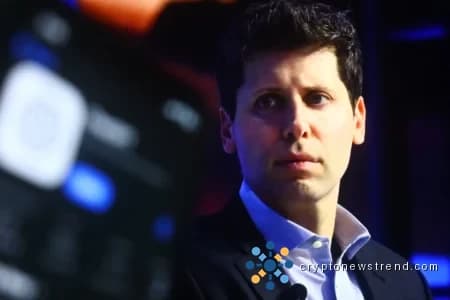
Table of Contents During a Tuesday appearance, OpenAI’s chief executive Sam Altman acknowledged that his previous predictions about artificial intelligence triggering widespread job elimination have not come to fruition, especially regarding entry-level office positions. Speaking remotely at an event organized by Commonwealth Bank of Australia in Sydney, Altman participated in a conversation with CBA’s CEO Matt Comyn. Altman revealed that while OpenAI’s leadership accurately predicted technological developments following ChatGPT’s November 2022 release, they significantly miscalculated the societal and economic ramifications. “I’m actually pleased to have been mistaken about this,” Altman explained. “I anticipated we’d see greater displacement of entry-level white-collar positions by this point than what’s actually occurred.” He recognized that his earlier cautionary statements fueled anxiety about artificial intelligence and job security. “People say ‘you could have spared everyone considerable anxiety,'” he noted, though he maintained it was an important concern to voice at the time. The OpenAI leader didn’t provide concrete employment statistics during his discussion. Previously, he’d discussed potential sector-wide workforce contractions resulting from AI developments. Several prominent corporations have already started transforming or eliminating positions through AI implementation. Organizations including HSBC, Amazon, Standard Chartered, and Commonwealth Bank of Australia have publicly announced workforce adjustments connected to automation initiatives. Altman’s perspective changed following a hands-on trial with AI tools. He deployed AI to handle his Slack and email correspondence, with each message clearly marked “this is Sam’s AI.” This firsthand experience led him to reassess the importance people place on genuine human engagement. “People genuinely value authentic human interactions,” he observed. “This isn’t something I foresee delegating to an AI in the near future.” That practical test, according to Altman, illuminated why AI hasn’t displaced workers at the anticipated scale. Numerous positions still demand authentic human connection that artificial intelligence simply can’t duplicate. “This experience fundamentally changed my perspective on how employment will evolve,” Altman stated. He continued: “I don’t believe we’re heading toward the kind of employment catastrophe that some organizations in our industry predict or promote.” In separate news, Reuters disclosed last week that OpenAI is gearing up to submit confidential paperwork for a U.S. initial public offering within the next several weeks. Sources indicate the company aims for a $1 trillion market valuation and plans to secure no less than $60 billion in capital, based on an October Reuters investigation. Altman avoided commenting on the potential IPO during his Tuesday conference session. Discover top-performing stocks in AI, Crypto, and Technology with expert analysis.