
تشير مقاييس البيتكوين هذه إلى أن عمليات البيع البالغة 60 ألف دولار في شهر فبراير ربما تكون قد حددت القاع
The biggest question facing bitcoin investors is whether the market bottom was set in early February, when the largest cryptocurrency briefly fell toward $60,000.
While no indicator can assess that with certainty, a number of onchain and derivatives metrics suggest the worst of the current correction may be in the past, especially as bitcoin is now trading back above $77,000.
المقياس الأول هو Realized Cap، والذي يقيس القيمة الإجمالية للبيتكوين بناءً على سعر كل عملة تم نقلها آخر مرة على السلسلة. وهي تختلف عن القيمة السوقية، التي تعتمد على سعر السوق الحالي، وتعكس أساس التكلفة الإجمالية للمستثمرين. وغالبًا ما يتم استخدامه لتتبع رأس المال الذي يدخل الشبكة أو يغادرها.
بلغ الحد الأقصى المحقق ذروته بالقرب من 1.12 تريليون دولار قبل أن ينخفض إلى ما يقرب من 1.08 تريليون دولار حيث انخفضت عملة البيتكوين بأكثر من 50٪ من أعلى مستوى قياسي لها في أكتوبر. يعد هذا تدميرًا كبيرًا للثروة، وهو أحد أكبر الأضرار المسجلة على الإطلاق. ومع ذلك، بدأ المقياس الآن في الاستقرار وتشكيل قاعدة، على غرار النمط الذي شوهد خلال أدنى مستويات السوق الهابطة في عام 2022.
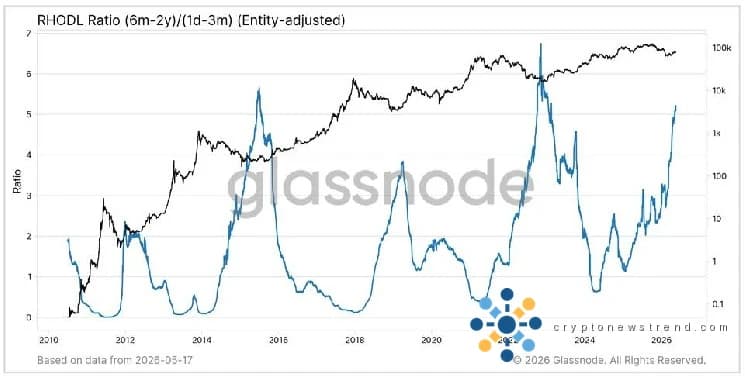
The second metric is the RHODL Ratio, which compares wealth held by longer-term holders (six months to two years) with newer market participants (one day to three months). وتتجاوز النسبة الآن 5، وهي ثالث أعلى قراءة مسجلة.
حدثت القراءات الأعلى الوحيدة خلال قيعان دورتي 2015 و2022. يشير هذا إلى أن حاملي السندات على المدى الطويل يواصلون السيطرة على العرض. منذ فبراير، زاد عرض حاملي العملات على المدى الطويل بأكثر من 400000 بيتكوين.
Finally, perpetual futures funding rates, the payments exchanged between long and short traders to keep futures prices aligned with spot markets, remained negative for one of the longest periods on record between February and May.
Historically, sustained negative funding reflects extreme bearish sentiment and overcrowded short positioning, conditions that often form market bottoms as selling pressure becomes exhausted.
Similar setups occurred during the Silicon Valley Bank crisis in March 2023, the yen carry unwind in August 2024, and the tariff-driven selloff in April 2025, all of which ultimately marked major bitcoin lows.