
Beijing Embarks on Radical Monetary Reform with Proposed Legislative Update for National Banking Authority
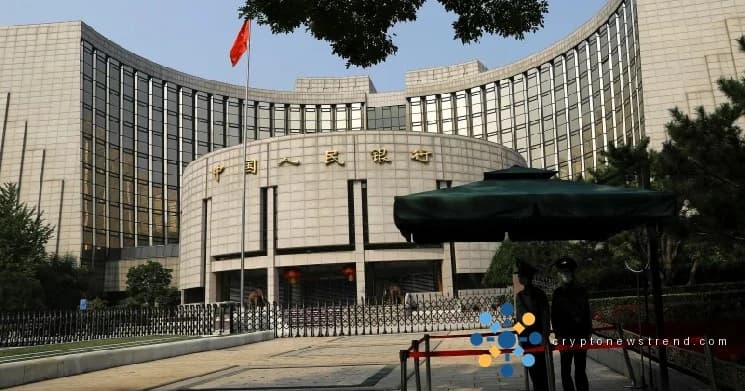
China’s State Council, the country’s top administrative body, has discussed and approved a draft revision to the People’s Bank of China Law. The move signals Beijing’s escalating effort to tighten its grip on a financial system that has been rattled by shadow banking risks, governance failures, and systemic vulnerabilities that have simmered for years.
The revision is designed to strengthen the regulatory framework for banking and, critically, to protect citizens’ assets. Think of it as China rebuilding the plumbing underneath its financial house while people are still living in it. Not glamorous work, but the kind that prevents catastrophic leaks.
What the revision actually does
At its core, the draft revision targets gaps in regulation and enforcement mechanisms that have allowed risk to accumulate in China’s financial system. The central bank law, which governs how the PBOC operates and what authority it wields, hasn’t kept pace with the complexity of modern Chinese finance. This update is meant to change that.
One of the more consequential elements: a proposed revision reviewed in late 2025 would extend banking supervision beyond institutions themselves to include major shareholders and controllers. In English: regulators want to know who’s actually pulling the strings behind bank ownership structures, not just what the banks are doing on paper.
That’s a meaningful shift. China’s banking sector has been plagued by cases where opaque ownership structures allowed connected parties to extract value, take on excessive risk, or circumvent regulations entirely. By bringing major stakeholders under the supervisory umbrella, Beijing is attempting to close a backdoor that has been exploited repeatedly.
Advertisement
The draft revision also fits into a much larger legislative puzzle. China is undertaking a comprehensive financial law overhaul, with a draft financial law containing 11 chapters and 95 articles serving as the cornerstone of this effort. The central bank law revision is one piece of a multi-year campaign to reinforce legal structures across the entire financial system.
Why this is happening now
China’s financial regulators have spent the better part of this decade trying to defuse a series of interconnected risks. Shadow banking, the vast ecosystem of lending and investment that operates outside traditional banking channels, has been a persistent headache. Property sector stress, local government debt, and weakening confidence in smaller financial institutions have compounded the problem.
The PBOC sits at the center of all of this. As China’s central bank, it’s responsible for monetary policy, financial stability, and increasingly, for coordinating the regulatory response to systemic threats. But its legal mandate hasn’t always matched the scope of what it’s been asked to do.
Revising the central bank law gives the PBOC a stronger legal foundation to act. It also sends a signal to markets, both domestic and international, that Beijing is serious about institutional reform rather than just ad hoc crisis management. There’s a difference between putting out fires and installing a sprinkler system. This revision is supposed to be the sprinkler system.
The timing also matters in the context of China’s broader economic challenges. With growth slowing, capital markets under pressure, and foreign investors scrutinizing China’s regulatory environment more closely than ever, demonstrating a commitment to rule-of-law governance in finance isn’t just good policy. It’s a strategic necessity.
What this means for investors
For anyone with exposure to Chinese financial markets, or considering it, this revision deserves attention for several reasons.
First, stricter oversight of major shareholders and controllers in the banking sector could lead to forced divestitures, governance restructurings, or compliance costs that ripple through bank valuations. In the short term, that might look like volatility. In the longer term, it could mean cleaner balance sheets and more transparent institutions, which is exactly what foreign institutional investors have been demanding for years.
Second, the comprehensive nature of this overhaul, 11 chapters, 95 articles in the broader draft financial law alone, suggests this isn’t a one-off announcement. It’s a multi-year regulatory tightening cycle. Companies and investors who assume the current rules of engagement will remain static are likely to be caught off guard as new provisions take effect.
Third, and perhaps most importantly, the revision’s emphasis on protecting citizens’ assets reflects a political priority that supersedes market considerations. Beijing has watched bank runs, wealth management product failures, and deposit freezes erode public trust in the financial system. When a government explicitly frames a law revision around protecting ordinary people’s money, that tells you where enforcement energy will be directed.
The competitive landscape for foreign financial institutions operating in China could also shift. Tighter domestic regulation tends to level the playing field in some ways, since Chinese banks face higher compliance burdens, while simultaneously raising the complexity of operating within the regulatory framework.
The risk to watch is execution. China has a long history of announcing ambitious regulatory reforms that lose momentum in implementation, particularly when they conflict with local government interests or politically connected business groups. The gap between the law on paper and the law in practice has been one of the defining features of Chinese financial regulation. Whether this revision narrows that gap or simply adds another layer of complexity will determine whether it actually delivers the stability Beijing is promising.