
Bipartisan Backing Propels Sweeping Cryptocurrency Regulation Bill Forward in Breakthrough Senate Committee Decision
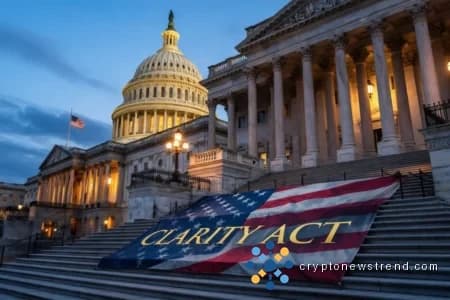
Table of Contents The CLARITY Act passed the Senate Banking Committee in a 15-9 vote on Thursday. The bipartisan outcome came after last-minute negotiations during the markup itself. Two Democratic senators, Angela Alsobrooks of Maryland and Ruben Gallego of Arizona, crossed party lines to advance the bill. Both senators, however, noted their floor votes are not guaranteed. The bill now moves toward a full Senate debate, with a tight timeline ahead. The markup began with uncertainty over Democratic support. About 90 minutes in, Sen. Gallego signaled he would vote yes to advance the bill, though he clarified this was not a commitment for the floor. Shortly after, Committee Chairman Sen. Tim Scott announced a bipartisan compromise had been reached. As part of that deal, five amendments from Sen. Cynthia Lummis were added for consideration. Most passed with five Democrats joining in favor — Warner, Warnock, Alsobrooks, Gallego, and Cortez Masto. However, on the final committee vote, only Gallego and Alsobrooks voted yes. Alex Thorn of Galaxy Research noted the outcome in a post on X, writing that the bipartisan advancement raises the odds of final passage and placing the bill at a 75% chance of becoming law in 2026. https://t.co/2DOIlh5t9t — Alex Thorn (@intangiblecoins) May 16, 2026 Both Alsobrooks and Gallego stated that further changes are needed before they commit to a floor yes vote. The central Democratic concern is an ethics provision. This would bar senior officials and elected members from holding financial interests in or promoting digital assets. The Senate Banking text must now be reconciled with the Senate Agriculture Committee version, which advanced in January. After that, Majority Leader Sen. John Thune must schedule floor time for a full Senate debate, which is expected to take about a week. The proposed timeline suggests Banking and Agriculture reconciliation could begin the week of June 1. Senate floor consideration may follow around June 15, with a possible final Senate passage by June 22. A Senate-House reconciliation process could wrap up by late July, with a presidential signature targeted for the week of August 3. Outside of ethics, other open issues include the treatment of DeFi under Title III and the Blockchain Regulatory Certainty Act in Section 604. These areas remain concerns for law enforcement-focused lawmakers on both sides. The CLARITY Act, paired with last year’s GENIUS Act, is expected to establish a broad framework for digital asset markets in the United States. Legislators and industry participants have worked on this type of market structure legislation for several years, with the goal of keeping crypto innovation within U.S. regulatory boundaries.