
China cabinet discusses draft revision to central bank law, signaling sweeping financial overhaul
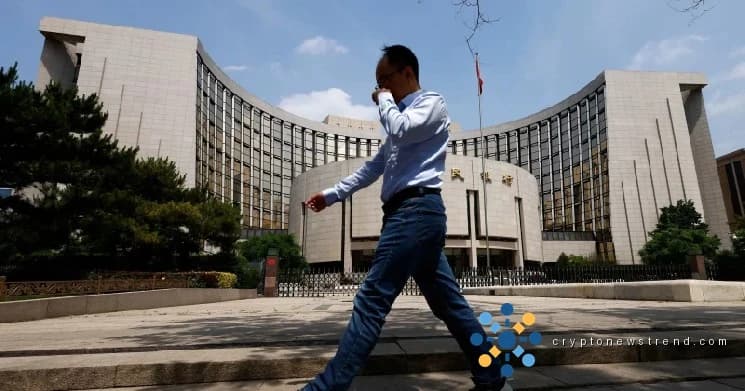
China’s State Council, the country’s top executive body, has taken up a draft revision to the law governing the People’s Bank of China. The move is the clearest signal yet that Beijing is serious about restructuring how its financial system is supervised, regulated, and ultimately controlled.
For crypto markets, the significance is indirect but real. Any rewrite of the PBoC’s legal foundation will almost certainly address digital currency authority, cross-border capital flows, and systemic risk tools, three areas where crypto and traditional finance increasingly collide.
What Beijing is actually doing
The draft revision to the PBoC Law sits inside a much larger project. China has been overhauling its entire financial regulatory framework, and this particular piece of legislation is arguably the keystone.
The People’s Bank of China isn’t just a central bank in the way the Federal Reserve is. It also plays a coordinating role across China’s sprawling financial system, from banking supervision to foreign exchange infrastructure to digital yuan development. Rewriting its governing law means redefining the boundaries of that authority.
Here’s the thing. The revision reportedly targets not just financial institutions themselves, but also their major shareholders and controllers. In English: Beijing wants to look behind the corporate curtain and hold the actual decision-makers accountable, not just the entities on paper.
Penalties for violations are expected to increase under the new framework. That’s a pattern China has repeated across tech, real estate, and education, write broad rules, then back them up with enforcement teeth sharp enough to change behavior.
Advertisement
The draft also appears designed to formalize the PBoC’s alignment with the Chinese Communist Party’s leadership structure. Under Xi Jinping, the Party has created enhanced financial commissions to oversee the system, and the revised law would codify the central bank’s place within that hierarchy.
The bigger regulatory puzzle
This isn’t happening in isolation. The PBoC Law revision connects to at least two other major regulatory initiatives that have been moving through China’s legislative pipeline.
First, there’s the Draft Financial Stability Law, which establishes unified mechanisms for managing systemic risk. Think of it as China’s answer to the 2008 financial crisis playbook, except built proactively rather than reactively. That law strengthens the PBoC’s coordination role when a financial institution or market segment starts wobbling.
Second, proposed regulations for China’s interbank foreign exchange market emphasize comprehensive supervision and advanced risk management tools for cross-border capital flows. This matters enormously for anyone watching how China manages capital movement in and out of the country, a perennial concern for crypto markets that often serve as unofficial on-ramps and off-ramps for yuan-denominated capital.
Together, these three pillars, the revised PBoC Law, the Financial Stability Law, and enhanced FX market regulations, represent Beijing’s attempt to build a regulatory architecture that can handle the complexity of modern finance. The centralization under CCP leadership is the thread running through all of it.
China has historically operated with a somewhat fragmented regulatory approach, with different agencies overseeing banking, securities, and insurance. The current reform wave consolidates that authority, giving the PBoC a clearer mandate and reducing the gaps between supervisory bodies that financial risks tend to exploit.
What this means for crypto and digital assets
Look, China banned crypto trading and mining back in 2021. That hasn’t changed, and a PBoC Law revision isn’t going to reverse it. But the legal framework governing the central bank directly shapes how China approaches digital currency, specifically the digital yuan (e-CNY) that the PBoC has been piloting for years.
Any revision to the central bank’s governing law is expected to clarify the PBoC’s authority over digital currency issuance and the financial infrastructure that supports it. That’s significant because the digital yuan is Beijing’s preferred answer to the question that Bitcoin and stablecoins also try to answer: how do you move value efficiently in a digital world?
For international crypto markets, the cross-border flow provisions deserve close attention. China’s tightening grip on foreign exchange infrastructure and capital movement could have ripple effects on stablecoin usage in Asia, OTC trading desks that facilitate yuan-crypto conversions, and the broader liquidity landscape for digital assets in the region.
The emphasis on scrutinizing major shareholders and controllers also echoes regulatory approaches being adopted globally. The European Union’s MiCA framework and proposed US stablecoin legislation both push toward identifying and holding accountable the actual humans behind financial entities. China is moving in a similar philosophical direction, just with characteristically more centralized execution.
For investors watching the macro picture, the takeaway is that the world’s second-largest economy is building a financial regulatory framework designed for the next decade, not the last one. Whether that framework eventually creates space for some forms of digital asset activity, or further walls off China’s financial system from the global crypto ecosystem, depends entirely on what ends up in the final text. The State Council discussing the draft is step one of a process that could take months or years to complete, but the direction of travel is unmistakable: more control, more oversight, more Party.