
Costco (COST) Stock Drops 16% From Peak — Should You Buy the Dip?
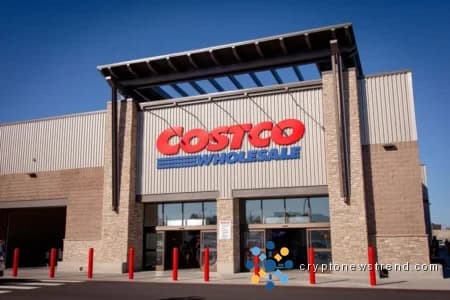
Table of Contents Costco Wholesale (COST) has been under pressure lately. Shares settled at $946.11 on Monday — the weakest close since the final days of January — following a bruising stretch that saw the stock decline in seven of the previous eight sessions. Costco Wholesale Corporation, COST The decline represents roughly a 16% retreat from the company’s record closing price of $1,094.32, which was reached earlier this month. Even with the downturn, Costco remains ahead approximately 10% for the year. Yet the recent weakness has ignited discussion among investors: does this signal trouble ahead or present an attractive entry point? The selling began following Costco’s fiscal third-quarter financial results, which were unveiled last Thursday. The company’s earnings per share fell six cents short of Wall Street’s projections. On the revenue side, though, results exceeded forecasts and underlying fundamentals appeared solid. Comparable-store sales jumped 12% in aggregate, with fuel sales providing significant momentum. Stripping out gasoline, comparable sales advanced 6.6% — marginally under the 6.7% consensus estimate from analysts. Mizuho analyst David Bellinger remained unfazed by the results. He emphasized that Costco’s commitment to maintaining low prices forms the bedrock of its business model — the strategy that drives high renewal rates and consistent member visits. Jefferies analyst Corey Tarlowe echoed that sentiment. “Elevated gas engagement is reinforcing member loyalty and frequency, supporting both near-term comps and long-term ecosystem strength,” he wrote. Certainly, aggressive pricing creates margin pressure. But Wall Street views this as an intentional strategic choice rather than a fundamental weakness. D.A. Davidson analyst Michael Baker went even further, elevating Costco to the firm’s best-of-breed list in the wake of the selloff. He highlighted the warehouse club format’s formidable competitive advantages — including high barriers to entry, a curated merchandise selection, and reliable membership fee revenue. Baker’s research reveals a compelling narrative. Despite representing only 5% of overall U.S. retail, warehouse clubs have expanded at a 6% annual clip since 2007 and 11% annually from 2018 onward — substantially outpacing broader retail and grocery segments. “Costco has taken share from other warehouse clubs and in retail overall, growing 9% annually since 2007,” Baker noted. Not all observers are rushing to buy. Even Baker acknowledged valuation as a legitimate concern. Trading around 42x forward earnings, COST carries a premium price tag — even following the recent decline. Certain calculations place the trailing earnings multiple near 50x, a figure that gives some market participants pause given current economic uncertainties. Nevertheless, Wall Street’s consensus outlook anticipates double-digit earnings expansion for both the current fiscal year and the next. Costco has also distributed $19.7 billion to shareholders via dividends over the last five years, supplemented by another $3.2 billion through share repurchases. As of Monday’s close, COST was changing hands around $949.50.