
Cryptography community converges on consensus: founder's original cryptocurrency stash should remain in perpetual lockdown
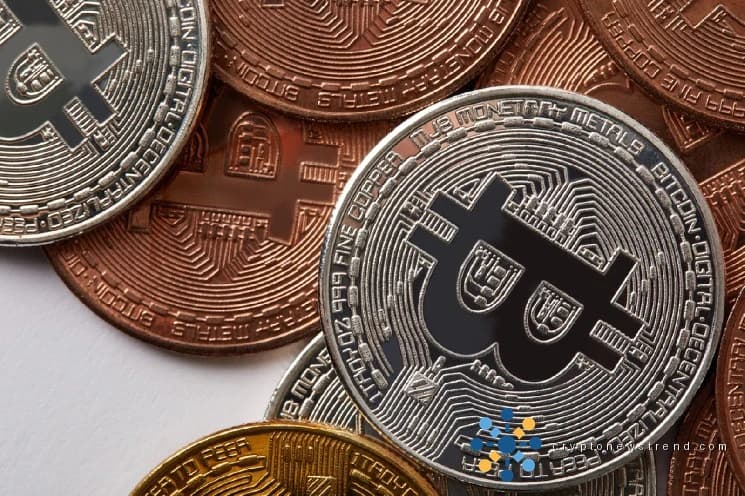
A consensus is forming among developers and crypto advocates that Satoshi Nakamoto's original Bitcoin holdings must remain strictly untouched, according to Alex Thorn, head of firmwide research at Galaxy Digital.
"I had many discussions about quantum & Bitcoin in Las Vegas this week, both on and off stage, with skeptics, advocates, and many overall smart Bitcoiners," he said.
According to Thorn, the community is mostly in agreement when it comes to the sanctity of the network's foundational property rights. "Satoshi’s coins (P2PK) should not be touched," he stated. "Violating his property rights could be disastrous for Bitcoin’s core value proposition."
"Honeypot" theft fears
The risk of a quantum computer eventually breaking the legacy Pay-to-Public-Key (P2PK) cryptography used in Bitcoin's earliest days has sparked fears of a massive "honeypot" theft.
However, Thorn argues the logistics of such an attack are extremely sophisticated, which is why the threat appears to be overblown.
"The risk is also lower than many realize—Satoshi’s coins are in ~22,000 addresses, each of 50 $BTC," he explained. "A long-range attack would have to crack them all."
Active entities and exchanges, which hold larger consolidated wallets, can proactively upgrade to post-quantum (PQ) addresses if there is such a need.
The network could survive the liquidity shock even if Satoshi's coins somehow end up being compromised.
As noted by Thorn, Bitcoin markets routinely absorb sell-offs of over one million $BTC. The community is seemingly prepared to weather a massive market crash.
"Suffer a 50% drawdown (even if it were possible to take all of Satoshi’s coins) to preserve Bitcoin’s core property rights? I think most Bitcoiners would accept that trade-off," Thorn remarked.
Being vigilant
Despite the agreement to leave the legacy coins alone, the community is not ignoring the quantum computing threat.
There is broad support for proactive, behind-the-scenes development. "It is good to work on new crypto for Bitcoin, post-quantum or otherwise," Thorn affirmed.