
Diplomatic Thaw Between Washington and Tehran May Unlock Crucial Maritime Trade Route
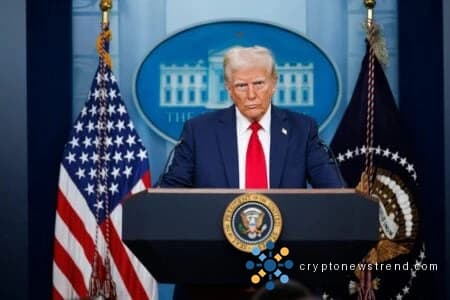
In a surprise announcement on Saturday, President Donald Trump revealed that the United States and Iran are on the cusp of finalizing a preliminary agreement, paving the way for comprehensive peace talks. This breakthrough could potentially lead to the reopening of the Strait of Hormuz, a vital waterway that accounts for approximately 20% of global petroleum transportation. Through a post on Truth Social, Trump expressed optimism about the negotiations, stating that a framework had been "largely negotiated" between the US, Iran, and other intermediary countries. He assured the public that further details would be disclosed in the near future.
The Strait of Hormuz has been closed since late February, following a joint US-Israeli military operation that resulted in the death of Iran's long-time leader, Ali Khamenei. This blockade has had a profound impact on international petroleum markets, contributing to global economic challenges. As a result, Brent crude contracts closed Friday's trading session at just over $100 per barrel, while the US WTI benchmark ended the week above $96. However, oil prices began to decline on Thursday, following reports of a potential ceasefire agreement.
On Saturday, Trump engaged in discussions with the leaders of several countries, including Saudi Arabia, the UAE, Qatar, Pakistan, Turkey, Egypt, Jordan, and Bahrain. He also spoke with Israeli Prime Minister Benjamin Netanyahu, who has historically been skeptical of diplomatic overtures towards Iran. Esmail Baghaei, a spokesperson for Iran's foreign ministry, confirmed that both nations are nearing the final stages of developing a memorandum of understanding, with a 30-60 day timeframe for reaching a comprehensive agreement deemed achievable.
The proposed framework suggests that Iran would temporarily reopen the Strait of Hormuz and waive passage fees during the negotiation period, in exchange for the US lifting its maritime blockade on Iranian ports. Additionally, Tehran is seeking the rapid release of approximately $100 billion in frozen financial assets, currently held internationally under US sanctions. Pakistan and several Arab states have advocated for a six-week extension of the existing ceasefire to allow for further diplomatic efforts.
However, the preliminary framework does not address the fundamental disagreement regarding Iran's nuclear capabilities. The US is pushing for a comprehensive agreement that includes a 20-year moratorium on Iranian nuclear activities and the transfer of highly enriched uranium to US custody. Iran has categorically rejected these demands, with Supreme Leader Mojtaba Khamenei stating that no enriched uranium would be allowed to leave Iranian territory. Iranian officials have indicated that nuclear issues should be discussed at a later stage, concurrent with the removal of comprehensive sanctions.
Other unresolved matters include Iran's ballistic missile capabilities and its support for regional armed factions, both of which are major concerns for Israel and Washington's Gulf allies. The semiofficial Fars News agency has disputed Trump's characterization of the agreement, claiming that Iran would retain control over transit routes, scheduling, and passage authorization through the Strait of Hormuz. Despite the progress made, hostilities have not formally ended, and American military personnel and equipment remain deployed in Israel, leaving the possibility of renewed armed conflict if diplomatic efforts fail.
The proposed agreement marks the latest development in a long series of exchanges between Washington and Tehran, which has oscillated between promising diplomatic breakthroughs and threats of renewed military engagement. Certain Republican senators, such as Lindsey Graham, have publicly urged Trump to restart military operations rather than offer diplomatic concessions. As the situation continues to unfold, the international community remains vigilant, awaiting further developments in the ongoing negotiations between the US and Iran.