
Donald Trump's 2026 Digital Asset Portfolio Revealed
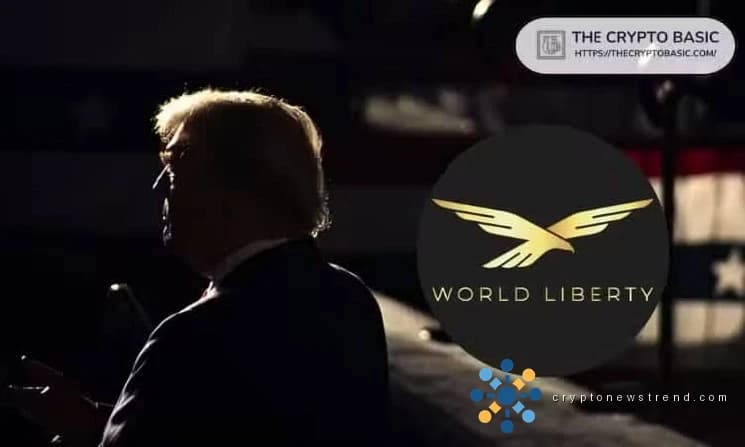
Donald Trump’s relationship with cryptocurrency has seen one of the sharpest turnarounds in political history. During his first term, he openly criticized Bitcoin, calling it a scam and expressing opposition to digital assets.
However, by the time he launched his second presidential campaign in 2024, Trump had completely changed direction. He began presenting himself as the “crypto president” and promised to turn the United States into the “crypto capital of the world.”
Notably, he has continued with this stance. Since returning to the White House in January 2025, Trump and his family have built a network of crypto-related holdings, projects, and affiliated businesses that include personal wallets, corporate Bitcoin reserves, DeFi platforms, and politically branded meme coins.
When including his stake in the $TRUMP token, Donald Trump’s overall crypto exposure is enormous. No sitting U.S. president has previously held such a wide range of digital asset interests while also directing national crypto policy.
Trump’s personal financial interests alongside his presidential authority has led to criticism from congressional Democrats, ethics groups, and even parts of the crypto industry itself despite Trump’s pro-crypto policies creating bullish momentum for the market in early 2025.
This feature discusses the confirmed data surrounding Trump’s crypto holdings in 2026, including his personal wallet, his main DeFi venture, two meme coins with links to the Trump brand, and the risks and market impact connected to these projects.
Donald Trump’s Confirmed Crypto Holdings in 2026
Trump’s confirmed crypto involvement in 2026 covers several areas, including a personal wallet tracked through blockchain data, a major position in the World Liberty Financial DeFi platform, two meme coins carrying the Trump family name, and a corporate Bitcoin treasury managed through Trump Media and Technology Group.
Financial disclosures show that Trump reported holding an Ethereum wallet valued between $1 million and $5 million. The filings also reference governance tokens linked to the World Liberty Financial project.
However, those disclosures provide only estimated value ranges and do not include exact balances, wallet addresses, or complete transaction records.
On the corporate part, Trump Media and Technology Group (DJT) adopted an aggressive Bitcoin treasury approach. In July 2025, the company announced it had accumulated around $2 billion in Bitcoin and Bitcoin-related securities, representing nearly two-thirds of its liquid assets.
This strategy later became more difficult to sustain. By March 2026, DJT held 9,542.16 Bitcoin worth about $647.1 million, along with 756.1 million Cronos tokens valued at about $53 million.
Trump’s crypto exposure also spills to stock holdings. Assets placed in a trust managed by his children include investments connected to Bitcoin miner MARA Holdings, crypto exchange Coinbase Global, Bitcoin treasury firm Strategy, Robinhood Markets, SoFi Technologies, and Block Inc.
These positions give the Trump family exposure across mining, exchanges, and corporate Bitcoin strategies at the same time, creating financial interests that critics say could affect the neutrality of the administration’s regulatory decisions.
In addition, American Bitcoin, launched in March 2025 after Hut 8 created it as a majority-owned subsidiary focused on Bitcoin mining and treasury holdings, received backing from Eric Trump and Donald Trump Jr.
At press time, American Bitcoin (ABTC) holds 7,500 BTC tokens worth $575 million, with an mNAV of 1.79. This makes the company the 16th-largest public holder of Bitcoin.
Trump’s Personal Crypto Wallet: What On-Chain Data Reveals
The most comprehensive data into Trump’s personal crypto holdings comes from Arkham Intelligence, the blockchain analytics firm tracking wallet addresses linked to the president. The on-chain data presents a noticeably different picture from public financial disclosures.
According to data from Arkham Intelligence, the value of a wallet associated with Trump dropped by around $9.22 million during 2025. The portfolio fell from $10.16 million on January 1, 2025, to just $939,590 by December 31, 2025. Most of the decline came from falling prices in Ethereum and meme coins.
Among the remaining assets, the wallet’s three most valuable tokens were TROG (a meme coin featuring a frog wearing a MAGA cap) along with the stablecoin $USDC and WeFi, a token linked to a decentralized crypto banking platform.
The TROG holding is especially interesting because it shows how public political wallets often receive unsolicited tokens, meaning some assets connected to Trump’s wallet may have been sent by outside users rather than personally purchased.
Current data from Arkham Intelligence data shows that the value of the portfolio has declined further to $623K. If this, TROG has the largest contribution, with 210 billion tokens worth $244K. Following TROG is the $USDC stablecoin, making up $142K. The portfolio only contains $20K worth of $TRUMP meme coin, and $14K worth of $ETH.
Meanwhile, it is important to note that World Liberty Financial also carried out a series of major crypto purchases on January 20, 2025, the exact day Trump was sworn in as the 47th president.
According to Arkham data, the project bought roughly $47 million worth of $ETH on Inauguration Day, and also added positions in Wrapped Bitcoin, Chainlink, Aave, Tron, and Ethena.
By the end of January, the platform’s crypto holdings had reportedly exceeded $388 million, with Ethereum making up the largest share. The timing raised questions about possible coordination between Trump’s inauguration and the project’s trading activity.
The decline in Trump’s personal wallet came during a period when Ethereum first fell, later rebounded, and then weakened again, despite Trump maintaining his public support for crypto.
World Liberty Financial ($WLFI): Trump’s Own Crypto Project
World Liberty Financial is the most significant and controversial crypto project linked to the Trump family. Launched in September 2024, the Ethereum-based DeFi platform has grown into a multi-billion-dollar operation featuring decentralized finance and highly centralized political and financial influence.
Since its launch, the project has raised more than $550 million through token sales, reportedly generated around $1 billion in profits for the Trump family, attracted investment from a Chinese billionaire linked to sanctions concerns, and sold a 49% stake to Abu Dhabi royalty shortly before the U.S. approved a major semiconductor export agreement with the UAE.
The project’s revenue structure is outlined in its own disclosures. Specifically, DT Marks DEFI LLC, the Trump family entity tied to the project, receives 75% of the net proceeds from $WLFI token sales, along with a share of stablecoin-related profits.
Justin Sun, founder of the Tron blockchain, invested $75 million into World Liberty Financial following Trump’s election victory in November. The $WLFI token first launched at $0.015 in October 2024, followed by a second sale at $0.05 in early 2025.
More recently, the project faced additional scrutiny. A Bloomberg report stated that after two fundraising rounds raised $550 million between October 2024 and January 2025, the platform sold another 5.9 billion $WLFI tokens to accredited private investors through undisclosed deals, bringing in hundreds of millions more.
Investors who bought tokens at prices as low as $0.05 were allowed to sell only 20% of their holdings, while the remaining tokens stayed locked. Unlike most token launches, World Liberty did not publish a clear unlocking schedule. Currently, $WLFI trades at around $0.06, nearly 87% below its peak price of $0.46.
World Liberty Financial has become one of the most politically connected projects ever seen in crypto. Its stablecoin has also seen massive expansion.
Cornell University professor Eswar Prasad called the situation surreal, arguing that the Trump family was profiting from a venture with major conflict-of-interest concerns while outside investors faced restrictions on sharing in those gains.
The Official Trump Meme Coin ($TRUMP): What You Need to Know
The Official Trump meme coin ($TRUMP) became one of the most talked-about and controversial token launches in crypto history after debuting on January 17, 2025, only three days before Trump’s second inauguration. The token runs on the Solana blockchain and uses a cartoon image of the president as its branding.
At launch, the token traded near $7. Within two days, it surged to an all-time high of above $75 on January 19, according to CoinMarketCap data. The rally pushed its market capitalization above $14.5 billion, briefly making it one of the largest cryptocurrencies in the market.
The token’s structure is heavily concentrated among insiders. Of the total 1 billion token supply, only 200 million were released to the public during the initial offering. The remaining 800 million are controlled by two Trump-linked entities, CIC Digital LLC and Fight Fight Fight LLC, and are scheduled to be released gradually over three years.
The crash that followed its rally was massive. Current data shows the OFFICIAL $TRUMP token trading around $2.04, with a 24-hour trading volume of roughly $183 million. CoinMarketCap ranks it 86th, with a market cap of $485 million.
That places the token more than 97% below its all-time high. Its fully diluted valuation still sits near $2.04 billion once all 1 billion tokens are included.
Despite the collapse, $TRUMP trading activity has remained relatively strong, showing that the token still attracts speculative interest. Because of its connection to the president, price swings remain extreme.
The token’s long-term future will likely depend on whether it can stay relevant after the initial political excitement fades and whether increasing token supply weakens demand further.
Earlier this month, the Senate’s Permanent Subcommittee on Investigations opened a formal inquiry into the $TRUMP coin, requesting information from Fight Fight Fight LLC over possible ethics concerns.
$MELANIA Meme Coin: The First Lady’s Token Explained
The $MELANIA meme coin launched on Jan. 19, 2025, just two days after the $TRUMP token, and quickly created even greater market disruption. Built on the Solana blockchain, the project became part of the wider political meme coin ecosystem linked to the Trump family.
One day before Trump’s inauguration, First Lady Melania Trump posted on X announcing the token’s launch. Within hours, the Solana-based coin surged more than 21,000% and briefly reached an implied market value above $8 billion.
The sudden demand also pulled liquidity away from the $TRUMP token, causing it to fall between 30% and 40% in a single day. The activity became so intense that Phantom Wallet reportedly handled around 8 million requests per minute, while Solana infrastructure providers reported network strain.
The token’s structure also raised concerns about centralization. Out of the 1 billion total supply, 35% was reserved for team vesting while 20% was allocated for community rewards.
Blockchain data suggested that one wallet may have controlled as much as 89% of the supply at launch. The project also lacks a decentralized governance system, with control appearing to remain largely with the founding team.
$MELANIA eventually reached an all-time high of $13.05 before falling to a low of $0.08993. Its market capitalization now sits around $92 million, ranking 309th on CoinGecko. This marks a drop of about 99% from its peak valuation above $1.7 billion.
The token did experience a short-lived recovery in early 2026. $MELANIA gained around 50% from the start of the year, outperforming Bitcoin and Ethereum over that period.
Open interest climbed 85% in early January 2026, according to Coinglass, helped by attention surrounding a documentary about the First Lady that premiered at the Kennedy Center.
However, the rebound did not last long, and the token later returned to heavily depressed levels. Currently, $MELANIA trades at $0.092865 with a total market capitalization of about $88.45 million and daily trading volume around $6.32 million.
How Trump’s Presidency Has Shaped the Crypto Market
Besides his own holdings, Donald Trump’s return to office has had a major impact on the wider cryptocurrency market and regulatory environment, affecting more than just the projects tied to his name.
One of the administration’s most important moves came on March 6, 2025, when Trump signed an Executive Order creating a Strategic Bitcoin Reserve and a U.S. Digital Asset Stockpile. This positioned the United States among the first nations to formally build a government digital asset strategy.
The reserve was funded using Bitcoin already held by the Treasury Department through criminal and civil asset forfeitures. White House AI and Crypto Czar David Sacks described the reserve as a “digital Fort Knox” for crypto assets. Trump also said the broader Digital Asset Stockpile would include Ether, XRP, Solana, and Cardano.
The administration also introduced wider structural changes. Specifically, Trump signed another executive order banning the development of a U.S. central bank digital currency, removing what many in the industry viewed as a potential competitor to Bitcoin and private stablecoins.
Meanwhile, the SEC created a dedicated crypto task force focused on building clearer regulations instead of relying mainly on enforcement actions, helping support Bitcoin ETFs and broader institutional participation.
These policy changes had a noticeable market impact. Bitcoin crossed $90,000 in the weeks after Trump’s November 2024 election victory, as investors anticipated a more favorable regulatory environment.
The departure of SEC Chair Gary Gensler in January 2025 also positively influenced market direction, as his replacement shifted the agency toward a more crypto-friendly approach.
Trump-linked companies appeared to benefit directly from the policy shift as well. Crypto.com, which had been facing likely enforcement action under the Biden administration, reportedly increased spending on lobbyists connected to Trump and donated $11 million to political groups tied to the president.
Within months, the investigation was dropped. By August, Crypto.com announced plans to invest around $1 billion in a venture connected to Trump’s social media company.
Are Trump-Linked Crypto Projects Legitimate Investments?
Whether Trump-linked crypto projects are legitimate investments remains a complicated question. These projects sit in a gray area between real blockchain businesses, politically driven speculation, and what critics call serious conflicts of interest.
Concerns about conflicts of interest have been direct and bipartisan. Ethics experts argue that if a president can influence crypto regulation while personally benefiting from the industry, that creates a major ethical problem. Within days of returning to office, Trump signed executive orders that directly affected how the crypto industry operates.
Congressional Democrats have also pushed for official investigations. Senator Warren argued that the $TRUMP meme coin “has massively enriched Trump personally, enabled a mechanism for the crypto industry to funnel cash to him, and created a volatile financial asset that allows anyone in the world to financially speculate on Trump’s political fortunes.”
Other senators raised national security concerns as well, highlighting reports involving actors tied to North Korea, Russia, and other sanctioned groups. They questioned whether $WLFI had adequate safeguards against sanctions evasion, money laundering, and terrorist financing.
Another controversy came from the Abu Dhabi investment in $WLFI added. A firm linked to the Abu Dhabi government, led by Sheikh Tahnoun bin Zayed Al Nahyan, the UAE’s National Security Advisor, reportedly purchased a 49% stake in World Liberty Financial for about $500 million.
The New York Times reported the deal in February 2026, noting that it happened before Trump’s inauguration. Soon afterward, the Trump administration approved a plan allowing the UAE access to large quantities of advanced semiconductor chips despite national security concerns.
For retail investors, the price history of these projects tells its own story. $TRUMP has fallen more than 97% from its peak. $MELANIA is down around 99%, while $WLFI has lost roughly 89% from its high. In all three cases, most of the token supply remains concentrated among Trump-linked entities, meaning the financial structure heavily favors insiders over ordinary investors.
However, it is important to note that the underperformance is largely due to the broader crypto market’s bearish phase. Other mainstream crypto assets have also seen similar declines. For instance, Cardano (ADA) is down 92% from its 2021 peak, while Sui has collapsed 80% from its 2025 all-time high.
Top Trump-Associated Coins to Watch in 2026
Despite the steep declines recorded by most Trump-linked tokens, several projects within the ecosystem still attract institutional and retail interest in 2026. Considering this, it is important to understand what each project actually represents before building any investment thesis.
$WLFI remains the most important project structurally within the Trump crypto ecosystem. The project’s USD1 stablecoin has become one of the fastest-growing stablecoins in the market, currently the fourth-largest stablecoin with a market cap of $4.7 billion.
The $WLFI project also holds reserve positions in Ethereum, Wrapped Bitcoin, Chainlink, Aave, Tron, Ondo, and Sui, meaning $WLFI’s treasury effectively acts as a diversified portfolio of major DeFi assets.
However, investors who bought $WLFI at $0.05 are still unable to access 80% of their holdings as of May 2026, while the project is also pushing for a 62 billion token unlock vote.
The $TRUMP token, despite falling massively from its highs, still records some of the strongest trading activity among Solana-based meme coins.
Daily trading volume currently sits around $183 million, while 7-day volume has reached roughly $1.248 billion. This heightened activity suggests that speculative interest remains active, and any major political development involving Trump could influence the token’s price.
Meanwhile, American Bitcoin (ABTC), the Trump-linked mining company backed by Eric Trump and Donald Trump Jr., may represent the most fundamentally supported investment tied to the Trump crypto network.
In March 2026, the company purchased 11,298 ASIC miners for its facility in Drumheller, Alberta. The new machines are expected to increase mining capacity by about 12% and add 3.05 exahashes per second, equal to roughly 0.3% of the Bitcoin network’s total computing power.
Because ABTC operates as a publicly traded mining and treasury company, it offers Bitcoin exposure with a higher level of regulatory oversight and financial transparency than meme coins.
Further, Trump Media and Technology Group’s DJT stock also provides indirect exposure to Bitcoin, although its performance as a crypto-focused investment has faced major difficulties.
The company purchased 11,542 Bitcoin at an average price of $118,522 and is now estimated to be sitting on losses of roughly $455 million as Bitcoin trades well below that entry point. DJT also recently transferred 2,650 Bitcoin to Crypto.com but stated publicly that the coins were not sold.
Risks of Investing in Politically Linked Crypto Tokens
The risks involving politically connected crypto assets like those in the Trump ecosystem can be different from the usual risks associated with traditional cryptocurrencies and deserve careful consideration before investors commit capital.
The most basic concern is the extreme concentration of insider ownership. In $TRUMP’s case, the two Trump-linked entities, CIC Digital LLC and Fight Fight Fight LLC, kept 800 million out of the token’s total 1 billion supply at launch. In other words, insiders control 80% of the supply.
Although those tokens are subject to a release schedule, there is no binding requirement preventing large-scale sales. Any major liquidation by insiders could easily overwhelm retail demand and pressure the market sharply lower.
Another issue is the lack of real utility. $TRUMP is expected to remain largely driven by speculation and market sentiment rather than underlying fundamentals. ARK Invest CEO Cathie Wood has publicly said she would avoid investing in meme coins without utility.
Also, regulatory risk is especially high for Trump-linked projects because of the political attention surrounding them.
The U.S. Senate’s Permanent Subcommittee on Investigations, led by Democrat Richard Blumenthal, launched a formal investigation into Trump’s crypto ventures, including the $TRUMP meme coin and $WLFI, over concerns tied to foreign investments, insider trading, and possible emoluments clause violations.
Any negative findings from regulators or congressional investigations could trigger a sharp decline in prices.
Trump Media‘s financial performance shows how those risks can affect investors directly. The company reported a first-quarter 2026 net loss of $405.9 million against revenue of just $871,200. Most of the loss came from $244 million in unrealized crypto losses and another $108.2 million in investment losses.
After buying Bitcoin near record highs using funds raised from shareholders, the company absorbed major losses as prices later corrected. These mainly affected retail investors rather than Trump-linked insiders. Meanwhile, the risk of market manipulation is another major concern.
Essentially, the Trump crypto ecosystem presents investors with a mixture of political momentum and a level of risk. These projects exist within a changing regulatory environment where the rules are still growing, while the administration influencing those rules also holds direct financial interests tied to the outcome.
However, for the average crypto investor, these risks may not pose the same issues as others would perceive. Specifically, the Trump crypto ecosystem still resides within the broader crypto ecosystem and could follow the direction of the market as well as leverage any bullish momentum that comes with its affiliation with the U.S. President.
For more on Trump news today visit our dedicated coverage TheCrytpoBasic hub