
Emerging Economies Embrace Digital Currencies as Eight African Countries Pave Way for Clearer Blockchain Laws
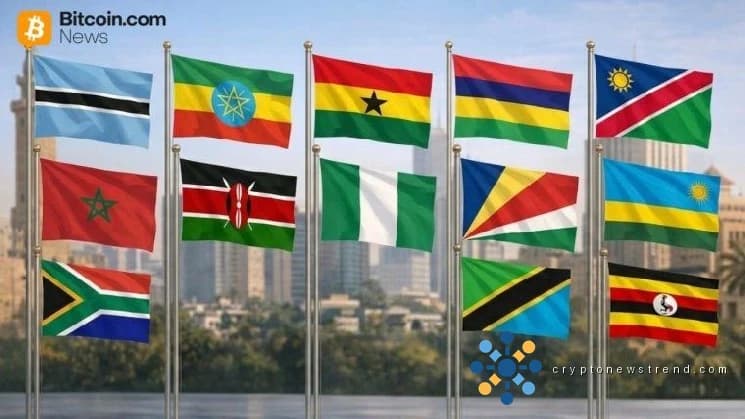
The African continent is witnessing a surge in crypto regulation, with no less than eight countries making significant strides in formalizing their oversight frameworks. According to Ripple, a pioneer in blockchain-powered payment solutions, this development is poised to drive adoption, investment, and integration into the global digital asset market. As of April 6, Ripple's findings highlight the progress made by countries such as South Africa, Nigeria, Kenya, and Mauritius in establishing a robust regulatory environment.
South Africa, in particular, has emerged as a trailblazer, having established a comprehensive regulatory framework that recognizes crypto assets as financial instruments. This has led to service providers being required to register with regulatory bodies, such as the Financial Sector Conduct Authority (FSCA) and the Financial Intelligence Centre (FIC). In Kenya, a legal framework for virtual asset providers has been put in place, with supervisory responsibilities divided between monetary and capital markets regulators.
Mauritius and Nigeria are also making notable progress, with the former expanding its regulatory toolkit to include broader licensing categories and clarifying its stance on stablecoin-related activities. Nigeria, on the other hand, has shifted towards formal recognition of digital assets within its securities framework, while relaxing earlier banking constraints and experimenting with supervised compliance environments.
Beyond these key markets, countries such as Ghana, Botswana, and Ethiopia are also taking steps to formalize their approach to digital assets. Ghana has introduced initial compliance measures, including registration requirements, which will serve as a foundation for more comprehensive oversight in the future. Botswana, Namibia, and Seychelles are at various stages of drafting or implementing crypto-focused regulations, with an emphasis on defining licensing processes and ensuring adherence to compliance standards.
Ripple notes that roughly eight African countries have implemented some form of crypto-specific regulation, with additional jurisdictions working towards formal frameworks. This gradual but intentional move towards regulatory consistency is expected to establish clearer entry conditions for market participants and pave the way for deeper integration into the global digital asset market.
The widespread adoption of digital assets in Africa is closely tied to the region's longstanding gaps in traditional financial systems, particularly in areas such as cross-border payment efficiency and access to stable foreign currencies. As a result, digital assets are increasingly being viewed as practical tools for addressing these limitations, especially in markets where conventional banking infrastructure remains uneven or inaccessible.
The success of mobile money platforms has already demonstrated the viability of digital-first financial solutions, creating a natural bridge for broader digital asset usage. Stablecoins, in particular, are seeing expanded use cases, ranging from commercial settlements to liquidity management and remittance flows, offering efficiency gains compared to legacy financial rails.
As regulatory clarity improves, financial institutions are expected to explore new service offerings, including secure custody and compliance-driven platforms, to meet increasing demand from both enterprises and individual users. Ripple believes that Africa remains one of the world's most compelling regions for digital asset adoption and momentum, with sustained alignment on policy standards potentially supporting a more cohesive, scalable, and resilient digital economy across the continent. By 2026, it is expected that more countries will have formalized their regulatory frameworks, driving growth and deeper global financial connectivity.