
European Central Bank Chief Cautions Against Leveraging Euro-Pegged Cryptocurrencies as a Counterbalance to US Currency Influence
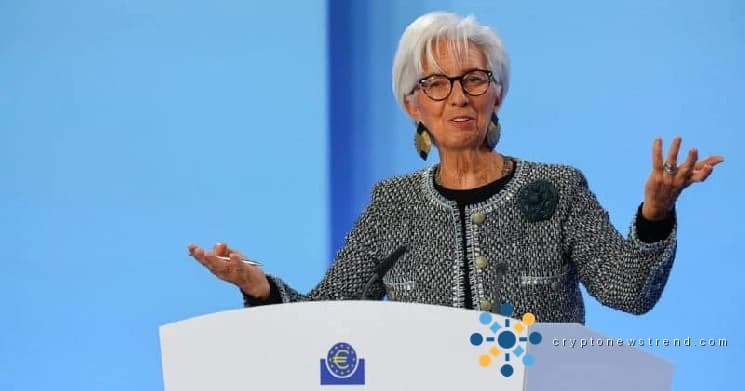
In a keynote address at the Banco de España LatAm Economic Forum on Friday, European Central Bank President Christine Lagarde cautioned against emulating the US model of promoting stablecoins pegged to the euro, instead advocating for a focus on developing a robust, tokenized financial infrastructure backed by central bank-issued money. The rapid growth of stablecoins, from a mere $10 billion six years ago to over $300 billion today, has been largely dominated by US dollar-backed tokens, with Tether and Circle controlling nearly 90% of the market.
Lagarde emphasized that the discussion surrounding stablecoins has shifted from their legitimacy to the imperative of their presence, with jurisdictions now forced to consider the consequences of not having them. However, upon closer examination, the case for promoting euro-denominated stablecoins appears less compelling, as their monetary and technological functions are distinct. While stablecoins can facilitate the extension of reserve currencies and support tokenized settlements, they also pose risks to financial stability, potentially undermining monetary policy transmission and increasing pressure on banks if deposits are diverted into non-traditional instruments.
The ECB president noted that stablecoins have become the de facto standard for tokenized finance due to their ability to settle transactions natively on blockchain networks. Nevertheless, she warned that private stablecoins are inherently fragile, as they can lose their peg during periods of stress, leading to market fragmentation across competing instruments. Rather than replicating the US stablecoin model, Lagarde argued that Europe should prioritize the development of public infrastructure, with the Eurosystem slated to launch a wholesale settlement system, Pontes, in September, which will enable tokenized transactions to settle in central bank money via the TARGET platform.
Furthermore, the ECB's Appia roadmap aims to establish a fully interoperable European tokenized financial system by 2028. Alvin Kan, COO at Bitget Wallet, suggested that regulated euro stablecoins could address concerns surrounding transparency and reserves under Europe's stringent MiCA rules, but highlighted that adoption remains a significant challenge. If Europe fails to support the development of scalable euro stablecoins, users and developers will likely continue to rely on USDC and USDT, given the existing liquidity and network effects concentrated around dollar-based tokens.
Kan cautioned that Europe may ultimately be left with a bifurcated market, where tokenized finance develops within regulated institutional frameworks, while everyday crypto payments and decentralized finance (DeFi) continue to rely on dollar stablecoins. The entrenched network effects of dollar stablecoins, already deeply embedded in global payments, remittances, and DeFi, will only become more challenging to dislodge the longer Europe delays in supporting scalable euro stablecoins.