
International Watchdog Sounds Alarm on Cryptocurrency Regulation, Urging Worldwide Adoption of Unified Safeguards to Mitigate Looming Financial Threats
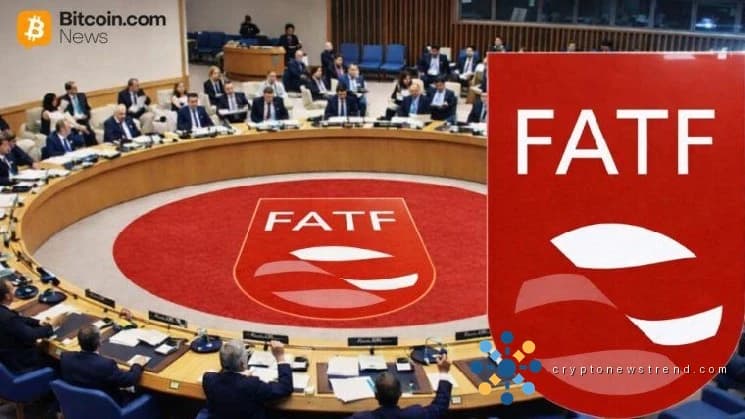
The global regulatory landscape for cryptocurrencies is undergoing a significant shift, with the Financial Action Task Force (FATF) ramping up efforts to enforce stricter standards across digital asset markets. In a landmark declaration issued on April 17, FATF ministers emphasized the need for jurisdictions to accelerate their implementation of crypto regulations, warning that those that fail to do so will face heightened scrutiny.
A key outcome of this declaration is the increased pressure on countries to bridge the gaps in their digital asset regulatory frameworks. The FATF's stance on cryptocurrencies has evolved, with the organization acknowledging the potential of blockchain-based finance to drive innovation, while also emphasizing the need for robust safeguards to prevent illicit activities. The declaration explicitly states that technology, including artificial intelligence, can bolster supervision and compliance, provided that appropriate safeguards are in place.
The FATF's Recommendation 15, which was revised in 2018 and supplemented with an interpretive note in June 2019, remains the cornerstone of global crypto regulation. This framework mandates that countries assess the risks associated with virtual assets, adopt a risk-based approach, and ensure that virtual asset service providers (VASPs) are properly licensed and supervised. The framework also requires customer due diligence, recordkeeping, and suspicious transaction reporting, as well as international cooperation.
However, the FATF's latest assessment reveals that only 29% of 138 jurisdictions evaluated have made significant progress in implementing these standards, with just one jurisdiction achieving full compliance. The organization has also turned its attention to stablecoins, which have been linked to a disproportionate share of illicit virtual asset transactions. According to a report released on March 3, 2026, stablecoins accounted for a staggering 84% of illicit virtual asset transaction volume in 2025, with many of these transactions taking place through unhosted wallets.
Offshore VASPs are also under increased scrutiny, with the FATF highlighting the need for more effective measures to detect, register, and supervise these entities. A report published on March 11, 2026, outlines strategies for addressing the risks posed by offshore VASPs, which often exploit weaker regulatory oversight.
The ministerial declaration sends a clear message, stating that jurisdictions that fail to rapidly and effectively implement the FATF standards will be held accountable through the organization's peer-review process. Ultimately, the FATF is not seeking to introduce new regulations, but rather to accelerate the enforcement of existing standards, eliminating cross-border loopholes and ensuring a more consistent and robust regulatory framework for cryptocurrencies.