
Investigation Reveals Outside Interference Sparked Blaze on HMM Namu, Disrupting Global Digital Asset Production Costs
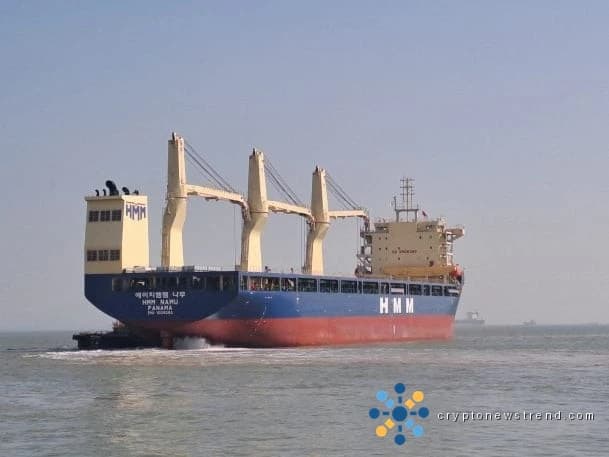
South Korea’s joint investigation team has confirmed what many suspected: the fire aboard the HMM Namu on May 4 was caused by external strikes, not an accident. Two unidentified aerial objects hit the cargo vessel as it transited the Strait of Hormuz, damaging a 7-by-5-meter section of the hull and igniting a blaze that, mercifully, caused no casualties.
The HMM Namu, operated by South Korea’s largest container shipping line, was struck while passing through the narrow waterway separating Iran from the Arabian Peninsula. South Korean investigators concluded the damage was consistent with aerial projectile impacts, not mechanical failure or onboard malfunction.
Suspicions have centered on Iranian drones. Iran has denied involvement.
A fragile ceasefire framework involving the United States, Israel, Iran, and Gulf states has been holding. An attack on commercial shipping in Hormuz, if attributed to a state actor, could unravel those negotiations quickly.
Oil prices surge, and Bitcoin miners feel the burn
Oil prices have surged from $65 per barrel in late February to over $100, driven in large part by Hormuz disruptions. That price spike has a direct consequence for Bitcoin mining operations in the US.
Mining costs powered by fossil fuels have climbed to between $85,000 and $90,000 per Bitcoin. The problem: Bitcoin itself is trading around $77,000. It now costs more to mine a Bitcoin than the Bitcoin is worth for operations running on oil and natural gas-derived electricity.
Iran’s own Bitcoin mining sector has been devastated. The country’s hash rate has dropped 77% since February 2026, a collapse driven by war-related disruptions to its energy grid and infrastructure.
Prediction markets turn bearish on Hormuz normalization
On Polymarket, the odds of Hormuz shipping traffic normalizing by the end of June 2026 fell to 42.5%, down from 54% before the HMM Namu strike.
Scammers smell opportunity in the chaos
Crypto scammers have begun targeting ships near the Strait of Hormuz, demanding fake “transit fees” payable in Bitcoin or Tether, exploiting the confusion and fear surrounding the security situation. The scam appears to be targeting vessel operators who may be unfamiliar with actual transit procedures in the strait.
What this means for investors
When production costs exceed market prices, miners either sell reserves to fund operations or reduce activity. Companies that have already invested in solar, wind, or hydroelectric power are now sitting on a significant competitive advantage, while those reliant on fossil fuels are facing a choice between operating at a loss, shutting down rigs, or pivoting to renewable energy.
If enough hash rate goes offline globally, particularly from Iran’s 77% decline and struggling US fossil fuel operations, the resulting difficulty adjustment could create a window where surviving miners become dramatically more profitable.