
Investors Flock to Kioxia as Imminent US Market Debut Sends Shares Skyrocketing Nearly Fivefold
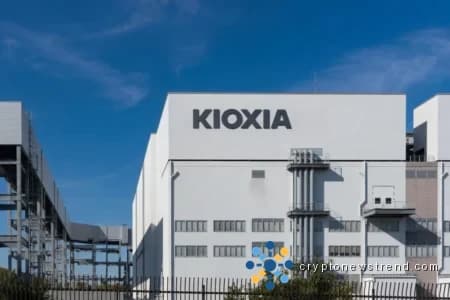
Table of Contents Kioxia Holdings (KXIAY) has announced plans to pursue a listing on a major U.S. stock exchange, marking a significant step up from its present over-the-counter trading status in American markets. The Tokyo-based flash memory manufacturer indicated that the listing remains subject to regulatory clearance, with specific details regarding timing, chosen exchange, and listing structure still to be determined. Shares of the KXIAY American depositary receipt have rocketed 460% since the beginning of the year. By comparison, Micron (MU), a leading U.S. memory competitor, has gained approximately 167% during the identical timeframe. For the fiscal year concluding March 31, 2026, Kioxia disclosed revenue growth of 37% year-over-year, reaching ¥2.34 trillion. Net profit totaled ¥554.49 billion, with basic earnings per share nearly doubling from the previous period. The company’s operating margin widened from 26.5% to 37.2%. Return on equity climbed to 51.9% from 45.9%, and return on assets advanced from 12.8% to 23.7%. Operating cash flow reached ¥616.54 billion, up from ¥476.41 billion in the prior year. Year-end cash reserves stood at ¥470.71 billion, comfortably exceeding short-term obligations of ¥203.37 billion. Kioxia’s product roadmap includes a Super High IOPS solid-state drive engineered to exceed 10 million input/output operations per second, with sampling expected during the latter half of 2026. The firm is simultaneously advancing its CM9 lineup, a performance-oriented SSD designed expressly for AI systems demanding both velocity and dependability. Through collaboration with Nvidia, Kioxia is engineering GPU-adjacent storage drives capable of direct GPU attachment, potentially offsetting some high-bandwidth memory requirements in generative AI server configurations. Production of its 10th-generation BiCS FLASH technology, surpassing 300 layers, is scheduled to commence in 2026. Dell and Kioxia jointly unveiled a 2U server design accommodating up to 9.8 petabytes of flash capacity, aimed at AI-intensive and data-rich enterprise environments. Leveraging PCIe 5.0 flash technology, the configuration emphasizes storage density and power efficiency for AI infrastructure deployments. This announcement coincided with Dell’s introduction of its Deskside Agentic AI offering, incorporated within its AI Factory with Nvidia framework. Cosmo Securities analyst Kazuyoshi Saito highlighted that Kioxia’s NAND manufacturing expenses operate 20%-30% below industry competitors, while delivering superior storage density per unit area and read/write performance that exceeds rivals by 10%-20%. The manufacturer’s collaboration with SanDisk maintains some of the planet’s largest NAND fabrication facilities in Yokkaichi and Kitakami, distributing equipment and research expenditures across partners. Kioxia recently committed to acquiring newly issued shares from Nanya, coupled with an extended DRAM supply arrangement—a strategic initiative to diminish its traditional reliance on external DRAM suppliers. Industry observers are monitoring one potential vulnerability: competitors such as SK Hynix are expediting quad-level cell enterprise storage solutions for AI data centers. Kioxia has acknowledged it is not presently pursuing high-bandwidth flash technology, potentially creating exposure in a rapidly expanding enterprise category. Following the earnings announcement, shares traded on the Tokyo Stock Exchange under ticker TSE:285A advanced 29.1%.