
Investors see dwindling profits from private lenders as central bank slashes borrowing costs
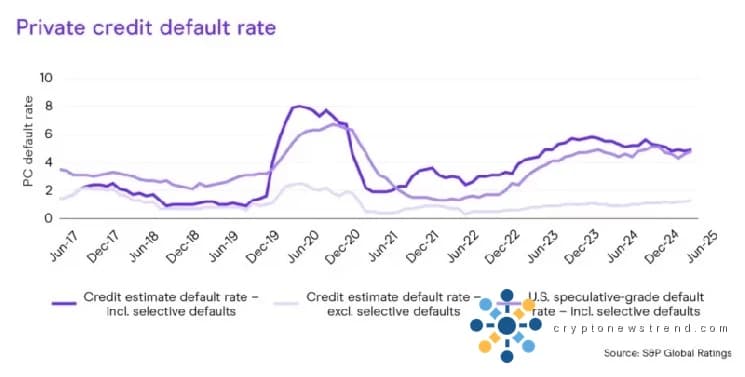
The current rate-cutting cycle of the Federal Reserve is having a profound impact on private-credit firms, as the yields they generate are being squeezed in real-time. A key feature of these loans, their floating-rate nature, which was a major contributor to their attractiveness when interest rates were rising, is now proving to be a double-edged sword as borrowing costs decline.
A significant proportion of the loans within these portfolios are linked to floating benchmarks, with the 3-month Secured Overnight Financing Rate (SOFR) being the primary reference point. As a result, when the Fed increases interest rates, SOFR also rises, leading to more substantial interest payments for lenders. Conversely, when the Fed reduces rates, lenders experience a decrease in interest payments.
The terms of new loan agreements being negotiated in the current environment reflect the changing interest rate landscape, with lower credit spreads being offered compared to those available during the period of high interest rates. This means that not only is the base interest rate falling, but the additional premium that lenders can command is also shrinking.
The legacy of the high-interest rate era continues to influence the performance of private-credit portfolios. Many private-credit managers had provided relief to borrowers who were struggling to meet their debt obligations due to higher servicing costs. This relief, which could take the form of payment deferrals or revised loan terms, helped to prevent portfolios from appearing distressed. However, these measures continue to affect portfolio performance, even as interest rates decline.
The Fed's recent decision to cut interest rates was prompted by weakness in the labor market and slower job growth. Nevertheless, a reduction in interest rates does not automatically improve the financial health of a company that was already struggling to service its debt at higher interest rates.
Although yields are declining, private credit still offers a premium compared to public bond alternatives. Investors can earn higher returns by lending through a private-credit fund than by investing in investment-grade or high-yield corporate bonds in the public market.
However, the risk that warrants closest attention is the potential intersection of lower yields and higher defaults. If the economic slowdown that led to the Fed's rate cuts results in a decline in credit quality among borrowers, private-credit firms may face a challenging scenario where they earn lower returns on performing loans while also absorbing losses on non-performing loans. As of now, the situation is being closely monitored by industry experts, including those at the Federal Reserve, who are watching the developments of December 2023 and their impact on the market in the following months, including May 2026.