
Investors Weigh In: The Battle for Artificial Intelligence Supremacy Between Two Tech Titans in the Chip Industry
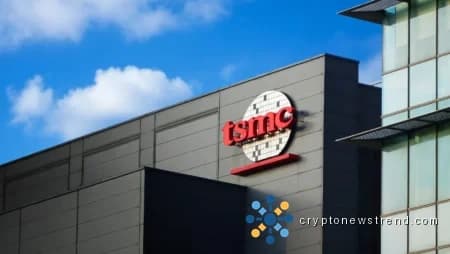
Table of Contents Taiwan Semiconductor produces the planet’s most sophisticated processors. ASML manufactures the equipment that enables their fabrication. These two corporations occupy pivotal positions in the artificial intelligence chip expansion, yet they represent distinctly different investment propositions. TSMC operates as the manufacturing partner for AI accelerators designed by the industry’s largest chip architects. The corporation projects 2026 revenue expansion approaching 30% measured in U.S. currency. Taiwan Semiconductor Manufacturing Company Limited, TSM Artificial intelligence accelerators represented a high-teens percentage of Taiwan Semiconductor’s complete 2025 revenue. This category encompasses AI graphics processing units, application-specific integrated circuits, and high-bandwidth memory controllers deployed in data center environments. During its first-quarter 2025 financial results presentation, Taiwan Semiconductor indicated that AI accelerator revenue would likely double throughout 2025. This expansion stems from diverse customers and processor varieties, not merely a single product generation. The operation requires substantial capital investment. Taiwan Semiconductor must continuously allocate significant resources toward advanced manufacturing capabilities to maintain technological leadership. Geographic concentration in Taiwan also introduces geopolitical considerations. Client concentration presents another consideration. A substantial portion of Taiwan Semiconductor’s leading-edge node revenue originates from a limited number of major chip designers. This arrangement establishes dependency alongside expansion potential. Nevertheless, if artificial intelligence chip demand maintains its trajectory, Taiwan Semiconductor represents one of the most immediate methods to participate in that growth through wafer manufacturing and sophisticated packaging services. ASML doesn’t fabricate semiconductors. Instead, it manufactures the lithography systems that chip producers utilize for advanced semiconductor production. This positioning places the company one layer separated from AI processor demand, while simultaneously enabling benefits from capital expenditure throughout the entire sector. ASML Holding N.V., ASML During the first quarter of 2026, ASML delivered €8.8 billion in net sales, achieved a 53% gross margin, and generated €2.8 billion in net income. Subsequently, the company elevated its complete-year 2026 sales projection to between €36 billion and €40 billion. ASML’s extreme ultraviolet lithography systems represent the exclusive tools capable of manufacturing the most advanced processors at commercial scale. No chip manufacturer can achieve leading-edge production without these machines. In its 2025 annual strategic assessment, ASML indicated that generative artificial intelligence was generating robust demand from both graphics processing unit and high-bandwidth memory producers. This dynamic means ASML gains from both logic and memory investment cycles. Equipment purchase orders can fluctuate from quarter to quarter. Export control regulations have additionally impacted ASML’s capacity to deliver its most sophisticated tools to particular markets, which continues as a monitored risk. The more diversified customer foundation spanning logic and memory provides ASML with a more consistent demand pattern compared to an individual foundry. Taiwan Semiconductor represents the more immediate investment thesis on AI processor production volumes. ASML functions as the wider infrastructure investment spanning the complete advanced semiconductor marketplace. Taiwan Semiconductor may deliver greater appreciation potential if AI chip demand remains robust. ASML may provide a more reliable pathway through the identical long-term trajectory. Both corporations remain fundamental to how the AI semiconductor ecosystem functions. The selection between them hinges on how immediately an investor seeks connection to AI processor manufacturing volumes versus comprehensive semiconductor capital investment.