
Judicial Ruling Hands Ex-President a Significant Blow as Bid to Revive Case Against Central Bank Leaders Hits a Roadblock
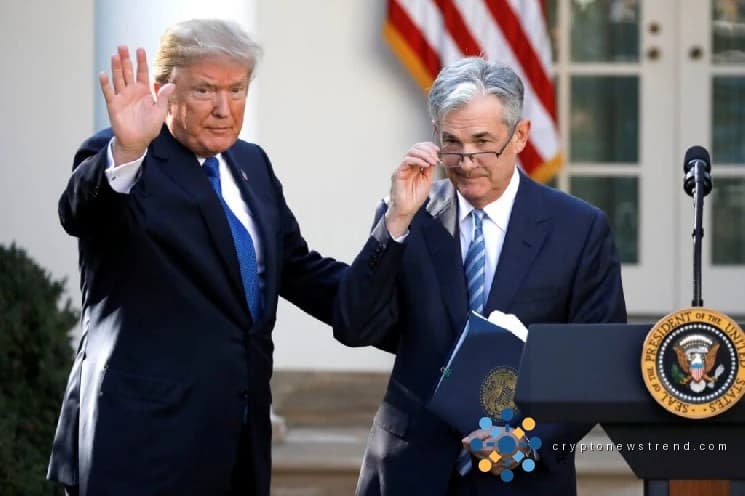
In a landmark decision, a Washington federal court has handed down a ruling that significantly impacts the ongoing probe into the Federal Reserve, led by Chairman Jerome Powell. The court, presided over by U.S. District Judge James Boasberg, has unequivocally denied the Justice Department's bid to revive grand jury subpoenas targeting the Fed.
Judge Boasberg's ruling, issued today, expressed skepticism regarding the government's rationale for seeking to overturn the initial dismissal of two subpoenas directed at the Federal Reserve's board of governors. These subpoenas had requested documentation pertaining to a substantial headquarters renovation project, whose costs had ballooned from an initial estimate of $1.9 billion to approximately $2.5 billion. According to Boasberg, the evidence suggests that the subpoenas were motivated by a desire to exert pressure on Powell, rather than a genuine pursuit of a criminal investigation. The judge emphasized that the authority granted by subpoenas is not absolute and should not be exploited.
The Justice Department's investigation was sparked by Powell's testimony before the Senate Banking Committee, in which he underscored the need for renovations to the Marriner S. Eccles Building and other Federal Reserve facilities. The project's escalating costs, attributed to design modifications and increased expenditures, had raised concerns. District of Columbia Attorney Jeanine Pirro has vehemently criticized the court's decision, labeling Judge Boasberg an "activist" and contending that the ruling undermines the grand jury's ability to scrutinize the Fed.
At the heart of the matter lies a crucial legal question: what was the true intention behind the subpoenas? Was it grounded in a legitimate suspicion of wrongdoing, or was it an attempt to coerce Powell into reducing interest rates or stepping down? The court has determined that the government failed to provide credible grounds for suspecting a crime, thereby justifying the dismissal of the subpoenas.
This development is perceived as a manifestation of the longstanding animosity between the Donald Trump administration and the Federal Reserve. Trump has been openly critical of Powell for several months, urging him to lower interest rates. The ruling is likely to be seen as a significant setback for the administration's efforts to exert influence over the Fed.