
Lawmakers Set to Scrutinize Digital Asset Proposals in Upcoming Legislative Session on May 14
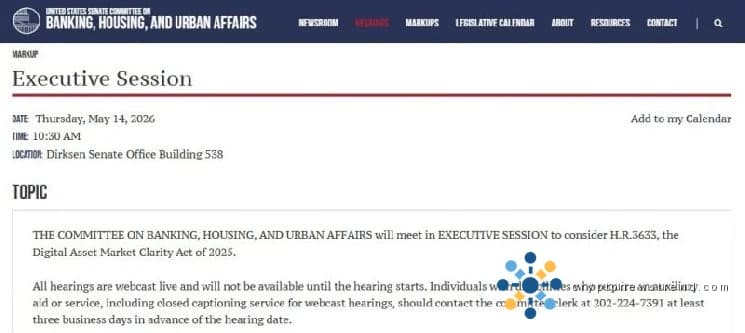
The Senate Banking Committee has scheduled a markup of the Digital Asset Market Clarity Act for May 14, setting up the most consequential week for crypto regulation on Capitol Hill in months. The bill, commonly known as the CLARITY Act, would draw firm jurisdictional lines between the SEC and CFTC over digital assets.
Getting here required clearing a sticking point that had stalled negotiations for weeks: whether stablecoins should be allowed to offer yield to holders. Senators Thom Tillis and Angela Alsobrooks hammered out a compromise on the issue, removing what had been the single biggest policy obstacle to bringing the bill before the committee.
What the CLARITY Act actually does
The bill establishes which digital assets fall under SEC jurisdiction as securities and which ones the CFTC oversees as commodities. The CLARITY Act first passed through the House, where it gained enough bipartisan momentum to move forward. The Senate version now incorporates the Tillis-Alsobrooks stablecoin yield compromise, which addressed concerns from both traditional finance lobbyists worried about competition and crypto-native firms eager to offer interest-like returns on dollar-pegged tokens.
The stablecoin yield question matters because it sits at the intersection of banking law and securities law. If stablecoin issuers can pass through yield from their reserve assets to token holders, it blurs the line between a payment instrument and an investment product.
The ethics problem nobody wants to talk about
A group of Democratic senators is demanding that the CLARITY Act include ethics provisions targeting federal officials’ involvement with crypto ventures. Republican members of the Banking Committee have largely resisted adding ethics language, viewing it as either a poison pill designed to kill the bill or a scope expansion that invites months of additional debate.
Why the August deadline matters
The bill needs to clear the full Senate before August to have a realistic shot at becoming law during this Congress. The House already passed its version. If the Senate can move a companion bill through committee in May, floor debate could realistically happen in June or July.
Investors watching the space should pay attention to how the ethics provision debate resolves in the days leading up to May 14. If Democrats secure some version of their demands and vote the bill out of committee, it signals genuine bipartisan viability for floor passage.