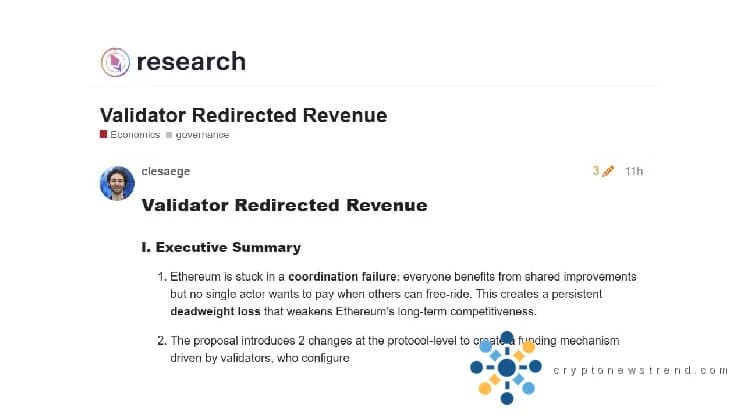

Ethereum’s new redirect‑rate proposal, championed by Kleros founder Clément Lesaege, seeks to allocate a portion of validator staking rewards toward shared infrastructure funding.
How the Proposal Functions
Validators would vote to activate the redirect mechanism; if a majority concurs, the protocol automatically directs up to 10 % of each validator’s staking income to designated development funds. The allocation percentages and recipient organizations can be modified by validators at any time, making the system semi‑voluntary yet binding once implemented.
Implications for Investors and the Crypto Market
By channeling staking revenue into joint projects, the proposal aims to mitigate the “free rider” dilemma that hampers coordinated investment in blockchain upgrades. Investors may view the mechanism as a way to ensure sustainable funding, potentially stabilizing Ethereum’s price and reinforcing its market position.
Community and Stakeholder Reactions
Lesaege argues that the measure mirrors traditional economic tools such as taxation, reducing dead‑weight loss and fostering growth. Critics caution that mandatory deductions could affect validator profitability, while supporters contend that collective financing is essential for long‑term ecosystem resilience.