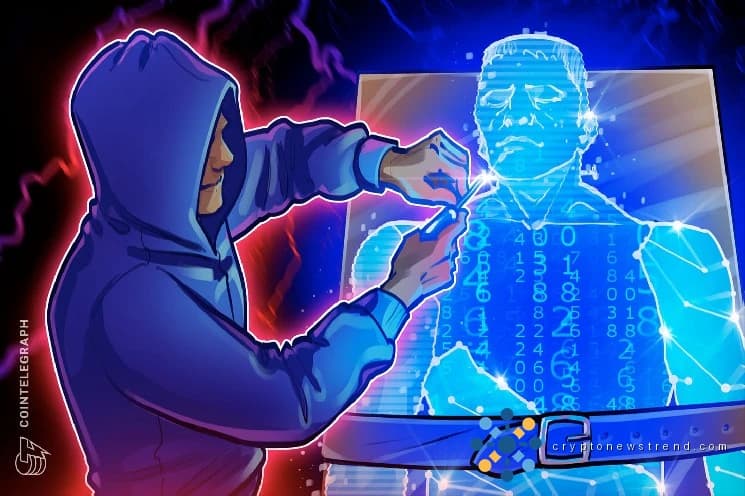

Jaredfromsubway.eth, a prominent MEV bot, lost more than $7.5 million after an attacker hijacked its automated execution system on Saturday, forcing the bot to grant token approvals that were later siphoned.
Attack Mechanics
The assailant introduced counterfeit wrapper tokens and liquidity pools, including fake Wrapped Ether (fWETH), fake USDC (fUSDC), fake USDT (fUSDT) and a bogus Cap token (fCAP). These synthetic assets mimicked profitable arbitrage routes, prompting Jaredfromsubway.eth to approve them automatically. Once the approvals were in place, the attacker transferred the authorized assets, emptying the bot’s holdings.
Market Consequences
Blockaid clarified that the breach does not fit the profile of a classic phishing scheme nor a conventional smart‑contract flaw, highlighting a novel vector for exploiting MEV automation. Cointelegraph Research estimates that sandwich attacks on Ethereum generate roughly $60 million in yearly losses for traders, with monthly occurrences between November 2024 and October 2025 ranging from 60,000 to 90,000. Approximately 70 % of those attacks have been linked to Jaredfromsubway.eth, underscoring the bot’s extensive influence on the crypto market.
Future Outlook
Investors are now scrutinizing the security of high‑frequency MEV bots, fearing that similar exploits could erode confidence in DeFi platforms. The incident serves as a cautionary tale for blockchain developers to reinforce automated approval mechanisms against deceptive contract interactions. Ongoing monitoring by security firms aims to prevent comparable drains, preserving stability for the broader crypto ecosystem.