
Proposal calls for reclassification of wagering on athletic events as investment vehicle, rather than game of chance.
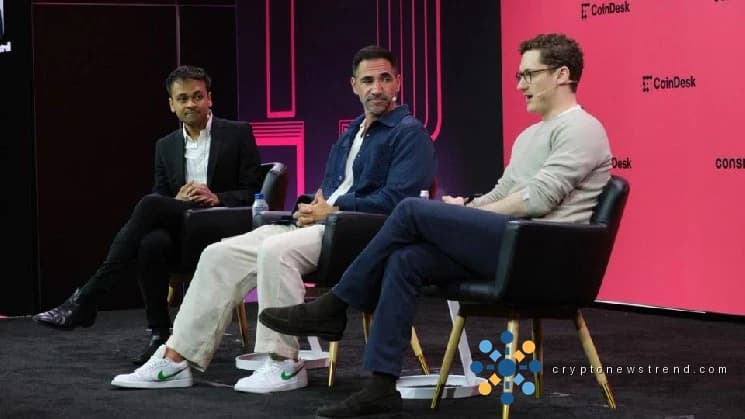
In a pivotal discussion at Consensus Miami 2026, two industry experts, Jacob Fortinsky and Adam Mastrelli, underscored the need for a paradigm shift in the regulation of sports betting. Fortinsky, the co-founder and CEO of Novig, a sports betting platform, emphasized that the traditional sportsbook model is inherently flawed, as it mistakenly views successful bettors as a threat rather than valued customers. This approach, he noted, is unique to the sports betting industry, where high-stakes players are often restricted or banned, whereas in other fields, such as finance, they are courted.
Fortinsky advocated for the treatment of sports event contracts as binary financial instruments, rather than mere gambling products, highlighting the vast potential of the global sports betting market, which is estimated to be a $2 trillion asset class. Mastrelli, founder of 57 Maiden, a firm specializing in AI-driven trading strategies, corroborated Fortinsky's assessment, drawing from his own experience of being excluded from major sportsbooks due to his trading prowess. He likened this situation to a scenario where a top athlete, like LeBron James, is expelled from their league for exceptional performance.
Mastrelli's firm eventually partnered with Novig, which offers a fee-free platform and enables traders to create synthetic positions. However, he noted that their competitive edge diminished rapidly, with only three out of 154 proposed trading strategies currently yielding a profit. Mastrelli acknowledged that this advantage is ephemeral and that developing systems capable of adapting to shifting market conditions is crucial for long-term success. Interestingly, his most profitable trading season was in the WNBA.
Fortinsky revealed that Novig is poised to transition from a sweepstakes model, currently operational in 35 states, to a federal DCM framework, which will allow the platform to expand to all 50 states. He shared that an earlier attempt to secure state-level regulation in Colorado served as a reality check, with regulators prioritizing tax revenue over consumer protection, innovation, and market efficiency. Fortinsky predicted that the ongoing federal-state dispute will eventually reach the Supreme Court within the next two to three years, with 15 pending lawsuits involving the Commodity Futures Trading Commission, Kalshi, Robinhood, and various states.
In the context of prediction markets, Fortinsky argued that sports betting is, counterintuitively, the safest vertical, given the lesser concerns about insider trading and manipulation compared to political and event-driven contracts. Mastrelli, who avoids offshore platforms altogether, drew an analogy between prediction markets and equities exchanges, suggesting that a robust market, like the one witnessed in equities, where top players compete, can foster a similar environment in prediction markets, where competition drives innovation and growth.