
Public outcry intensifies over cryptocurrency taxation as tens of thousands demand policy reversal in Seoul
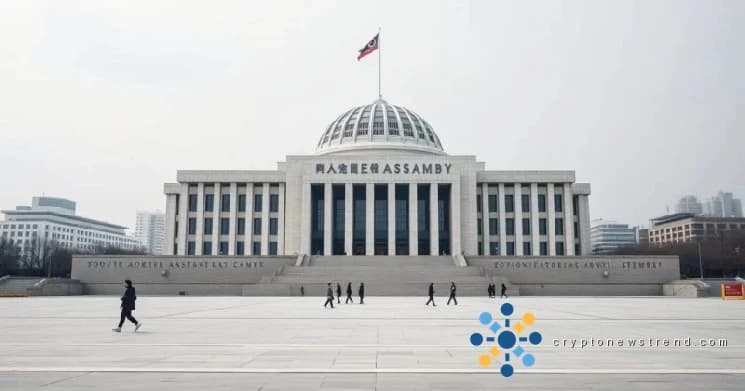
More than 52,000 South Koreans have signed a petition calling for the outright abolition of the country’s planned crypto tax, and it has been formally submitted to the National Assembly. That signature count crosses the threshold required to force parliamentary committees to actually review the demand, turning what started as grassroots frustration into a legislative event.
The core complaint is straightforward: retail crypto investors believe the tax framework treats them unfairly compared to stock market participants. And when you look at the numbers, it’s hard to argue they’re wrong.
The tax that won’t die (but also won’t arrive)
South Korea’s virtual asset tax has been in bureaucratic limbo for years. It was originally slated to take effect on January 1, 2022. That didn’t happen. Implementation has been delayed multiple times, with the current target date pushed to January 2026.
Here’s the thing. The tax itself imposes a 20% levy on annual virtual asset gains exceeding 2.5 million won, which translates to roughly $1,800 to $2,100. That’s not a high bar. For context, a moderately active trader could blow past that threshold in a single good month.
Compare that to the treatment of stock market investors in South Korea, who face capital gains taxation only on profits exceeding 50 million won. In English: stock traders get a cushion roughly 20 times larger before the government takes its cut. Crypto traders get a fraction of that protection, despite operating in a market that is, by virtually every measure, more volatile and more prone to sudden drawdowns.
Advertisement
The petitioners aren’t asking for special treatment. They’re asking for something closer to parity. Whether the National Assembly sees it that way is another question entirely.
Why 52,000 signatures matter
South Korea’s petition system isn’t just a digital suggestion box. When a petition crosses the 50,000-signature mark, it triggers a mandatory referral to the relevant parliamentary committees. That means lawmakers are now formally obligated to review and respond to the demand for crypto tax abolition.
This doesn’t guarantee anything changes. Parliamentary review can be thorough or it can be performative. But the sheer volume of signatures, crossing the threshold by a comfortable margin, signals that the issue has real political weight.
The demographics driving this petition are worth paying attention to. South Korea’s crypto market is disproportionately young. Younger voters in the country have been vocal about what they perceive as economic disadvantages baked into existing systems, from housing costs to investment opportunities. Crypto taxation has become a proxy battle in that broader generational frustration.
Politicians in South Korea have historically been attentive to crypto sentiment. During the 2022 presidential election, both major candidates made explicit promises related to digital asset policy, recognizing the voter bloc’s influence. A 52,000-signature petition landing on the National Assembly’s desk is the kind of thing that tends to generate at least some political posturing, even if substantive policy changes remain elusive.
The government isn’t budging, and that’s a risk
Despite the mounting public resistance, the South Korean government has signaled that it intends to proceed with the January 2026 implementation date. No further deferrals. No revised thresholds. The 20% rate on gains above 2.5 million won appears to be the plan.
This creates a genuine tension. On one side, the government has a legitimate interest in taxing investment gains. Virtual assets have generated substantial wealth for some participants, and leaving that entirely untaxed while other asset classes are taxed creates its own form of inequity. The fiscal argument for the tax is not unreasonable on its face.
On the other side, the threshold disparity between crypto and stock market taxation is glaring enough to fuel real resentment. A 2.5 million won exemption versus a 50 million won exemption for stocks isn’t a subtle difference. It’s a policy choice that effectively says the government views crypto gains as less legitimate, or at least less deserving of favorable treatment.
For investors, the practical implications are significant. A 20% tax on gains above roughly $1,800 means that even modest profits get clipped. This could push some trading activity offshore, toward exchanges or jurisdictions with lighter tax regimes. South Korea has already dealt with capital flight concerns in crypto markets before, and an aggressive tax structure without adequate enforcement infrastructure could exacerbate the problem rather than solve it.
Look, the repeated delays themselves tell a story. A tax originally planned for 2022 that still hasn’t been implemented by mid-2025 suggests that policymakers have been more uncertain about this than their public statements indicate. Each delay was a tacit acknowledgment that the timing, the framework, or the political environment wasn’t quite right.
The question now is whether 52,000 signatures and a mandatory parliamentary review will produce another delay, some form of compromise on the threshold, or nothing at all. South Korea’s crypto investor base is large, engaged, and increasingly organized. The government’s refusal to adjust the exemption threshold to something closer to stock market parity is the single most combustible element in this debate. If the 2.5 million won threshold survives parliamentary review unchanged, the political consequences could extend well beyond crypto policy, feeding into broader narratives about generational economic fairness that South Korean politicians have been trying to navigate for years.