
Regulator Claims Open-Source Blockchain Development Falls Under Free Expression Umbrella
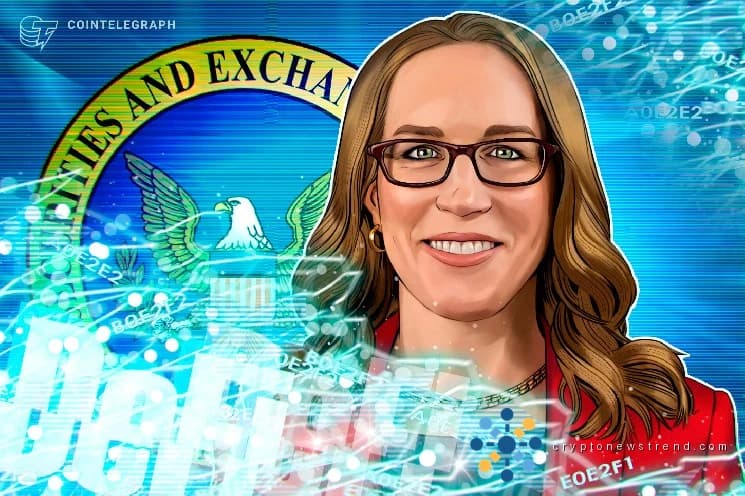
In a recent address at Princeton University's IC3 Blockchain Camp, US Securities and Exchange Commission (SEC) Commissioner Hester Peirce argued that software developers should not be held liable under federal securities laws simply for publishing open-source code. This stance marks a significant contribution to the ongoing discussion surrounding developer liability in the realm of decentralized finance.
According to Peirce, the act of publishing blockchain and DeFi code should not automatically render developers as securities intermediaries, merely because their software is utilized by others. The commissioner emphasized that the publication of open-source software is, in general, shielded under the First Amendment, and that decentralized protocols can function effectively without the need for traditional intermediaries. Instead, Peirce suggested that responsibility for any securities law violations should lie with the individuals who engage in such conduct.
As a long-time proponent of clearer regulatory guidelines for the crypto industry, Peirce cautioned against the application of rules designed for traditional, centralized financial institutions to decentralized blockchain networks. She pointed out that the SEC's current rulebook is replete with intermediaries, including brokers, dealers, and investment companies, and that this has led to a proliferation of similar entities within the crypto space.
However, Peirce questioned the appropriateness of extending these rules to the underlying blockchain infrastructure itself, given that distributed networks are used for a diverse range of purposes beyond securities transactions. Her comments are in line with a broader regulatory shift, as evidenced by the SEC's Crypto Task Force, which has been examining the application of existing securities laws to digital assets and decentralized systems since its inception.
Peirce's remarks come on the heels of recent guidance issued by SEC staff, which addressed broker-dealer registration requirements for certain user interfaces. The guidance suggested that some front-end websites and software interfaces that provide access to decentralized protocols may not be subject to traditional broker-dealer definitions. Meanwhile, the SEC has indicated that digital assets and blockchain technology will remain a key area of focus over the coming years, as outlined in its draft Strategic Plan through fiscal 2030. The plan highlights the potential of blockchain and crypto assets to revolutionize the US financial infrastructure, with Commissioner Peirce's comments reflecting this emphasis on thoughtful regulation and oversight.