
Ripple CTO Emeritus Shares Early Story and AI Vision for XRP Ledger
Vet, an $XRP Ledger validator, shares highlights from the just concluded $XRP Las Vegas, a two-day $XRP event which was held from April 30 to May 1.
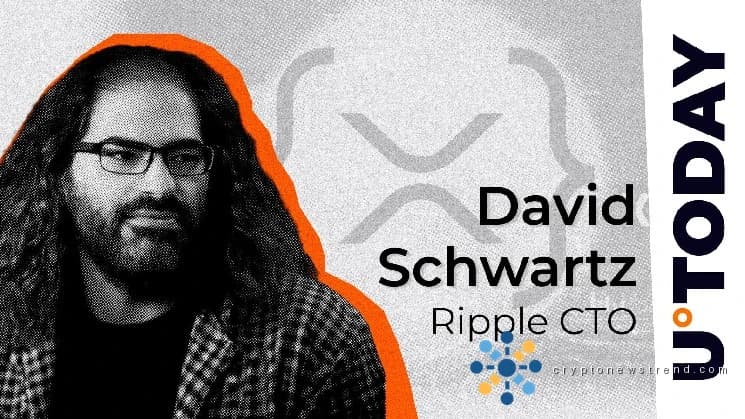
A highlight of the event was a fireside chat with Ripple CTO emeritus David Schwartz, who is also an original architect of the $XRP Ledger.
In 2011, the trio of David Schwartz, Jed McCaleb, and Arthur Britto began developing the $XRP Ledger (XRPL). Fascinated by Bitcoin, they set out to create a better version that improved upon its limitations with the aim of launching a digital asset that was more sustainable and built specifically for payments.
Fireside chat with David Schwartz at $XRP Vegas. Many cool anecdotes of the early days before and at Ripple.He mentions also his new idea of AI to break the barrier to use the social credit feature on the $XRP Ledger via Rippling of issued asset trustlines between people.Man… https://t.co/73nCt7ajt3 pic.twitter.com/h75SgXKGiW
— Vet (@Vet_X0) May 1, 2026
The $XRP Ledger first launched in June 2012. Shortly thereafter, the trio, joined by Chris Larsen, started the company NewCoin in September 2012, which was shortly renamed OpenCoin and is now called Ripple.
Being at the forefront of $XRP's innovation since its very start, Schwartz remains an authority figure to tell its story.
At the $XRP Vegas event, Schwartz shared anecdotes of the early days before and at Ripple. He also touched on a new idea of using AI to break barriers and use the social credit feature on the $XRP Ledger via Rippling of issued asset trustlines between people.
AI in spotlight at $XRP event
Chandler Fang, cofounder of t54ai and ex-product lead at Ripple, shared at the $XRP Las Vegas event about bringing the agentic economy to the XRPL. In February, the x402 facilitator went live on the $XRP Ledger, allowing AI agents to pay for services using $XRP and RLUSD with no need for API key or accounts.
AI agents are moving from recommendations to execution, paying for APIs, hiring other agents, managing balances, settling jobs, and acting on behalf of users, and this requires more than a wallet. It requires a trust layer with agent identity, risk assessment, credit, and accountability when something goes wrong.
Fang highlights a vision of enabling this next layer on the XRPL, making agent-native transactions trustworthy enough to scale.