
Stablecoin alternatives to the US dollar are barely making a dent, accounting for less than one half of one percent of the total market.
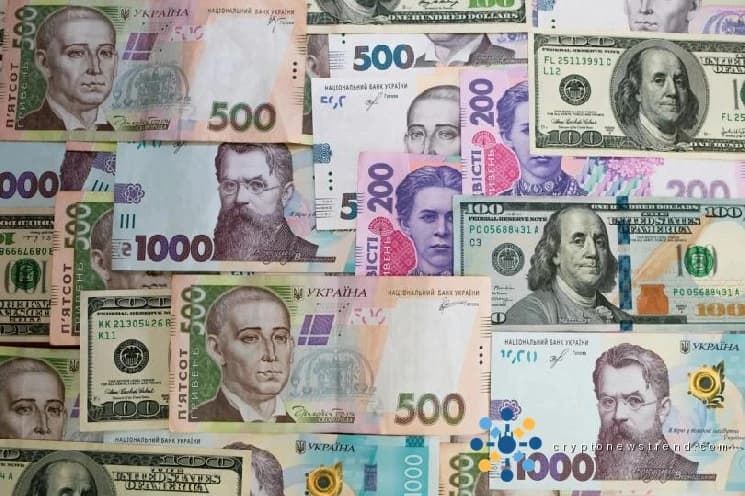
Non-dollar stablecoins have grown sharply over the past five years. Despite the headlines, they just have not become any more important.
The combined supply of euro, Canadian dollar, Japanese yen, Singapore dollar, and other non-USD stablecoins rose to about $771 million in April 2026 from $261 million in May 2021, according to stablecoin supply data from Artemis. But their market share slipped to 0.24% from 0.26%, leaving dollar-pegged tokens with 99.76% of the stablecoin market.
In traditional finance, dollar dominance is a slow bleed. The dollar accounts for 89% of FX trades, 61% of foreign-currency debt issuance, and 57% of global reserves — numbers that have been grinding lower for a decade.
Onchain, it's the opposite.
Rising Treasury yields may deepen that advantage. Dollar stablecoins are not just backed by the world’s dominant currency; they are increasingly backed by the world’s deepest pool of short-term government debt.
As yields rise, issuers holding T-bills can earn more on reserves, making dollar stablecoin issuance more profitable and giving large players more money to spend on liquidity, distribution, and partnerships.
That Treasury advantage is already visible on-chain. Tokenized U.S. Treasury debt stands at $15.4 billion, making it the largest distributed RWA category tracked by RWA.xyz, while tokenized non-U.S. government debt totals just $1.4 billion. In other words, the market for on-chain U.S. government debt is roughly 11 times larger than the equivalent market for every other government bond market combined.
That matters for stablecoins because dollar issuers can plug into a deep, liquid, and yield-bearing collateral base, while non-dollar issuers are trying to build stablecoin markets without anything close to the same reserve infrastructure.
That reserve advantage helps explain why dollar stablecoins have stayed so far ahead. Issuers need liquid, trusted collateral to back redemptions, and on-chain that overwhelmingly means short-term U.S. government debt.
During CoinDesk's recent Consensus conference in Hong Kong, Coinbase’s global head of stablecoins, John Turner, said the dominance became self-reinforcing early because “it was a liquidity story,” adding that “if there was liquidity, liquidity got volume.”
Liquidity attracted volume, volume attracted use cases, and use cases attracted more liquidity. That's a flywheel that non-dollar issuers have never been able to start.
There's a simpler explanation for the gap. Most fiat currencies aren't usable outside their home country in the first place.
The IMF tracks roughly 180 currencies in circulation worldwide. Of those, maybe eight trade with meaningful liquidity in global FX markets — the dollar, euro, yen, sterling, Swiss franc, Canadian dollar, Australian dollar, and yuan. The rest are effectively onshore instruments by design. Major Asian currencies like the Taiwan dollar or the Korean won are restricted onshore.
Stablecoins inherit the international reach of their parent currency, and most of the world's currencies have none.
That leaves a working universe of maybe a half-dozen currencies, like the euro or the yen, that could plausibly support a globally used stablecoin.
But the market doesn't seem interested for now.