
Taiwan suspects smuggling of Nvidia chips to China via Japan in first formal crackdown
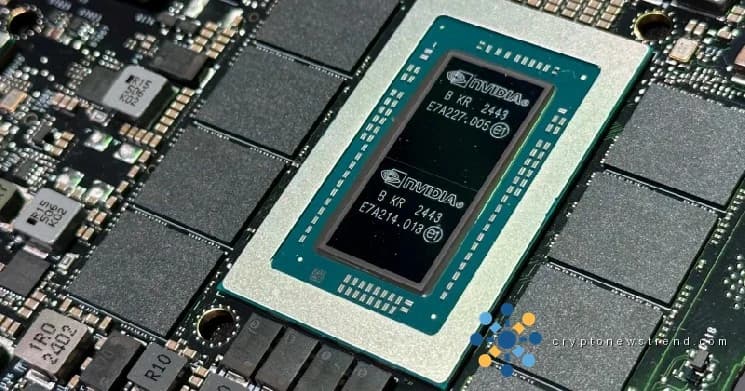
Taiwan just made its first formal move against semiconductor smuggling tied to US export restrictions on China, and the details read like a logistics thriller with forged paperwork and a multi-hop transit route designed to obscure the final destination.
Three suspects, identified by the surnames You, Wang, and Chen, were charged by Taiwan’s Keelung District Prosecutors Office after authorities launched a crackdown on May 21-22, 2026. The accusation: falsifying export documents to ship high-end AI servers equipped with advanced Nvidia chips out of Taiwan, ostensibly to a destination in Northeast Asia, but actually bound for Hong Kong and Macau, with investigators suspecting the real endpoint was mainland China.
The smuggling playbook
The operation involved approximately 50 Supermicro AI servers, each valued at around NT$10 million, or roughly $312,500. That puts the total haul in the neighborhood of $15.6 million.
The servers were originally purchased in Taiwan. The suspects allegedly listed a Northeast Asian country as the export destination on customs forms, creating a paper trail that looked clean on the surface.
Advertisement
The real route, prosecutors allege, involved transshipment through Japan before the goods would eventually land in Hong Kong or Macau. From there, reaching mainland China is, logistically speaking, trivial.
Some of those servers actually cleared customs before anyone intervened. That means the forged documents were good enough, at least temporarily, to fool the system.
The charges filed against the three individuals center on document forgery under Taiwan’s Criminal Code. No trade-specific statutes have been publicly cited in connection with the case.
Why this matters beyond Taiwan
The US has been tightening the screws on advanced chip exports to China since 2022. Washington’s logic is straightforward: cutting-edge AI hardware has military and surveillance applications, and the US would rather not subsidize China’s progress in those areas. The restrictions target the most advanced Nvidia GPUs and other high-performance processors that power AI training and inference at scale.
This case is Taiwan’s first formal action against semiconductor smuggling in relation to US export controls on advanced chips destined for China. Taiwan is finally showing the US it’s willing to police the pipeline, not just manufacture the product.
What this means for investors
Supermicro, whose servers were at the center of this case, isn’t accused of wrongdoing. The company builds the hardware. What happens to it after sale is, in theory, the buyer’s responsibility.
For Nvidia, the implications are indirect but persistent. Every smuggling case reinforces the narrative that demand for its restricted chips in China remains intense. Nvidia has already been designing China-specific chips that comply with US restrictions, essentially trying to serve the market legally while Washington polices the black market.