
The 'time pain' trap: why bitcoin’s bear market might need a few more months of ‘boring’ to hit a true floor
As the cryptocurrency market continues to navigate its current downturn, two pressing concerns weigh heavily on the minds of investors: the potential downside for bitcoin's price and the duration of this prolonged bear market. The financial strain inflicted by bitcoin's volatility has been a subject of intense discussion, but the temporal aspect of this trend is a separate, complex issue. The distinction between "price pain" - characterized by abrupt fluctuations that prompt investors to liquidate their positions - and "time pain" - marked by a lack of clear direction, leading to exhaustion among both optimistic and pessimistic investors - is crucial in understanding the current market dynamics.
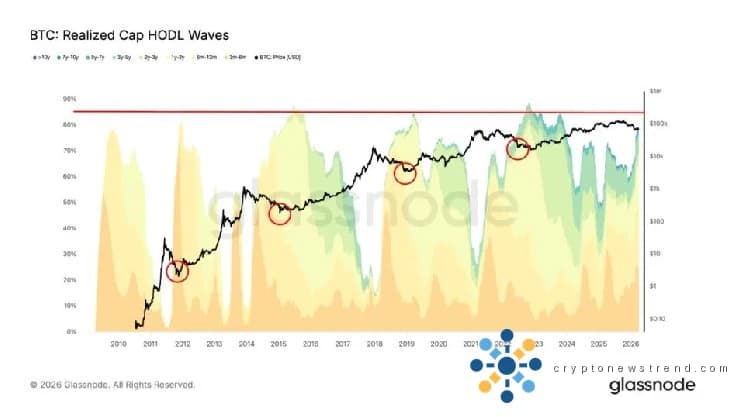
With bitcoin's price hovering below the $66,000 threshold, having plummeted over 3% in the last 24 hours and a staggering 45% since its peak in October, the cryptocurrency has been mired in a nearly six-month bear market. A key metric that may signal an extended period of uncertainty is the Realized Cap HODL Waves indicator, courtesy of Glassnode. By categorizing bitcoin's supply based on the time elapsed since the coins were last transferred, and weighting them according to the realized price - the average price at which the coins were last traded on the blockchain - this metric offers valuable insight into the market's composition.
Historically, the lowest points of bear markets have coincided with long-term investors - those who have held their assets for six months or longer - dominating the market, with their share of the supply reaching at least 85%. Typically, the price reaches its lowest point first, followed by a delayed increase in the proportion of supply held by long-term investors, indicating that these investors accumulated assets at depressed prices and persisted through the downturn. Presently, long-term holders constitute approximately 80% of the market, suggesting that the market may be approaching a bottom, although a prolonged period of consolidation - potentially spanning several months - is still likely ahead.