
What Trump’s China Visit Really Means for Bitcoin, Digital Assets, and Global Crypto Infrastructure
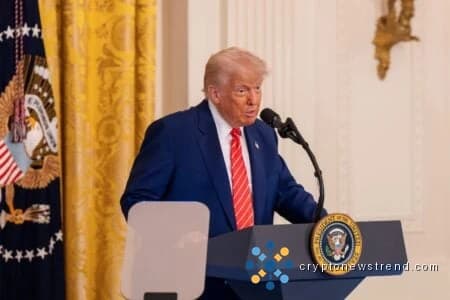
Table of Contents Trump’s China visit has drawn attention from the Bitcoin market, not for a full diplomatic reset, but for what limited economic adjustments could mean for digital asset infrastructure globally. Discussions reportedly cover aircraft purchases, agriculture, energy, and new trade forums. Tensions around AI, semiconductors, Taiwan, and Iran persist. The visit carries weight for crypto markets through its effect on financial systems and supply chains. A common assumption is that Trump’s China visit could loosen Beijing’s stance on cryptocurrency. That assumption, however, does not hold up against recent developments. Chinese authorities have recently reinforced restrictions on crypto activities, RWA tokenization, and yuan-linked stablecoins. Direct mainland Chinese demand for Bitcoin remains unlikely to grow in the near term. The real market focus has shifted toward financial infrastructure changes on both sides. In the U.S., regulatory clarity around stablecoins and crypto custody is gradually taking shape. Hong Kong, meanwhile, continues building regulated digital finance infrastructure through stablecoin licensing and projects like mBridge. These developments carry more weight than any headline from Beijing. The companies traveling with the delegation also reflect where institutional priorities lie. BlackRock, Goldman Sachs, Visa, Mastercard, Apple, Tesla, Meta, Qualcomm, Micron, and Boeing are all part of the trip. BlackRock and Goldman Sachs are actively expanding Bitcoin ETFs and tokenized financial products. Visa and Mastercard, on the other hand, are accelerating stablecoin payment networks. XWIN Japan posted about this on Cryptoquant’s quicktake, noting that the visit represents a transformation of financial infrastructure rather than a policy shift. As they wrote: “The real story is the transformation of financial infrastructure.” That framing captures how institutional players are reading the trip. Bitcoin mining operations stand to be directly affected by the outcome of these trade discussions. Global hashrate growth is now led largely by North American operations. However, ASIC hardware, semiconductors, and rare earth materials still rely heavily on Chinese supply chains. If trade tensions ease following the visit, mining investment could expand more quickly. Equipment costs may fall, and supply delays that have affected miners globally could ease. That would support broader hashrate growth over the coming months. If tensions worsen instead, the costs of mining hardware could rise further. Supply chain delays would pressure miners operating outside China. The effect would ripple across global Bitcoin production economics. In either case, the visit carries real consequences for mining infrastructure. Short-term market reactions may follow headlines closely. Over time, though, the focus will remain on how Bitcoin and digital assets continue integrating into the global financial system.