
A long-awaited diplomatic encounter is on the horizon as a former US president prepares to break an almost 10-year silence with a high-stakes meeting in Beijing
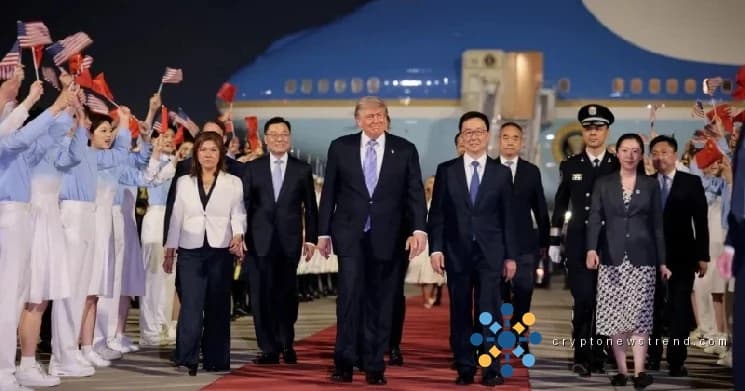
As US President Donald Trump prepares to meet with Chinese President Xi Jinping in Beijing, a pivotal summit is unfolding that has significant implications for the world of cryptocurrency. Beneath the surface of high-level discussions on trade disparities, technological competition, and the illicit flow of fentanyl precursors lies a subtler yet crucial contest that crypto enthusiasts should closely monitor.
The US government has recently intensified its regulatory efforts targeting stablecoin issuers, such as Tether, as part of a broader campaign to combat the financial underpinnings of fentanyl trafficking. Notably, these enforcement actions have highlighted the role of stablecoins in facilitating illicit transactions, including those originating from China. As Washington addresses the issue of fentanyl precursors from China, it is also scrutinizing the payment channels used in these transactions, with stablecoins emerging as a key area of concern.
In contrast, China has taken a vastly different approach to cryptocurrency, having banned onshore trading and mining activities several years ago, effectively dismantling the world's largest Bitcoin mining ecosystem at the time. Instead, Beijing has been promoting its central bank-issued digital currency, the e-CNY, or digital yuan, as a state-controlled alternative to decentralized cryptocurrencies. Meanwhile, China's blockchain initiatives continue to advance, albeit under stringent government oversight.
Despite President Trump's historical skepticism towards Bitcoin and the broader crypto landscape, his administration has presided over a period of remarkable growth and institutional development in the space. Major banks have begun offering custody services, futures products have matured, and regulatory frameworks have started to take shape. However, the upcoming summit's agenda, as reported by outlets like Fox News, has not explicitly mentioned cryptocurrencies.
The decisions made at the summit regarding AI export controls, financial surveillance, and cross-border payment systems will ultimately shape the future trajectory of the crypto industry. The US has already imposed restrictions on chip exports to China, prompting the country to accelerate its domestic semiconductor development. The Chinese government's ban on crypto mining has significantly altered the global hashrate landscape, driving operations to countries like the US and Kazakhstan. If the summit fails to yield cooperation and instead exacerbates tensions, it may reignite the notion that stablecoins like USDC serve as tools of US dollar dominance in digital markets, with China's e-CNY positioned as a countermeasure.