
Global Tensions Escalate as America Targets Key Iranian Military Installations, Sending Shockwaves Through Energy and Digital Currency Trading.
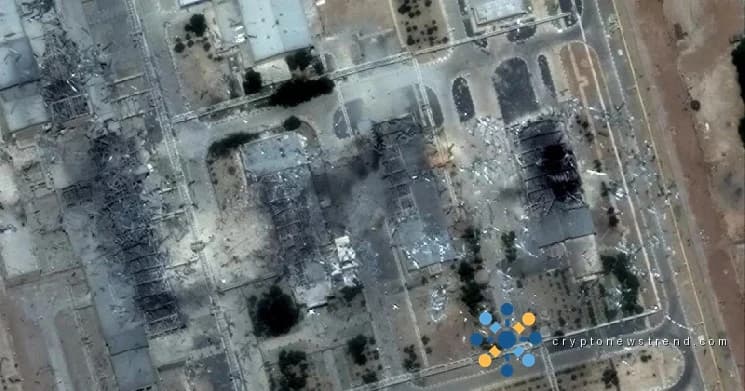
Tensions between the US and Iran have intensified, with the US military launching a targeted operation against Iranian missile launch sites and vessels on May 25. According to US Central Command, this preemptive strike was necessary to safeguard ships navigating the strategic Strait of Hormuz, a vital waterway that facilitates the transport of approximately 20% of the world's oil supply. The alleged attempt by Iranian boats to deploy mines in the strait prompted the US to take decisive action, characterizing the move as a justified act of self-defense.
The latest development is merely the newest chapter in a protracted and complex conflict that began unfolding in February 2026, when the US and Israel initiated a series of operations aimed at disrupting Iranian nuclear capabilities. Subsequent phases of this ongoing standoff included US airstrikes against Iranian nuclear facilities in June 2025, as well as renewed hostilities in March and May 2026.
Notwithstanding the ongoing kinetic exchanges, diplomatic efforts have persisted, albeit in a state of fragility. As recently as late May 2026, reports suggested that the US and Iran were edging closer to a comprehensive peace accord, with talks in Doha continuing despite the precarious nature of the ceasefire.
The implications of this volatile situation extend beyond the realm of geopolitics, with crypto markets exhibiting pronounced sensitivity to fluctuations in US-Iranian tensions. In April, the prices of prominent cryptocurrencies such as Bitcoin, Ethereum, and XRP experienced daily swings of between 1.5% and 7% in response to shifting tensions.
Furthermore, the US Treasury's decision to freeze over $344 million in digital asset wallets linked to Iranian sanctions evasion in late April 2026 underscores the increasing importance of cryptocurrencies in the context of international sanctions and enforcement. As Iran seeks to leverage digital assets to circumvent stringent US sanctions, Washington has responded with increasingly assertive on-chain enforcement measures.
The situation is also being closely watched by energy markets, given the critical role of the Strait of Hormuz as a conduit for approximately one-fifth of global oil supplies. Any disruption to this flow, whether resulting from military action, mines, or naval confrontations, is likely to send immediate shockwaves through energy markets. The $344 million wallet freeze sets a significant precedent for the US government's willingness to pursue on-chain enforcement during periods of heightened conflict, and the outcome of the Doha negotiations will be closely watched to determine whether a lasting agreement can be reached or if the fragile ceasefire will ultimately collapse under the weight of continued military action.