
Massive Retail Integration Unleashed as Stablecoin Giant Teams Up to Enable Widespread Digital Payments
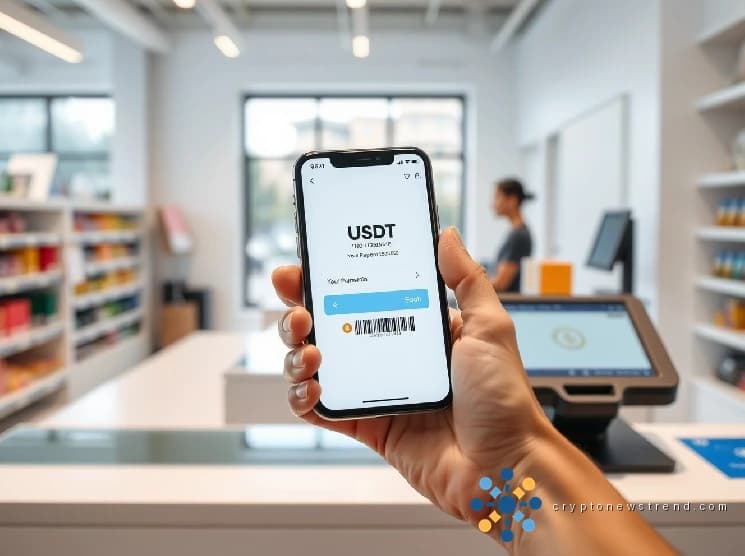
Stablecoin issuer Tether has announced a significant expansion of its $USDT payment capabilities, enabling transactions at more than 200,000 merchant locations worldwide. The initiative is the result of a collaboration with decentralized treasury management protocol Lydian and U.S.-based payments company Shift4, marking one of the largest integrations of a stablecoin into traditional retail and online commerce.
How the Partnership Works
Tether, the company behind the $USDT stablecoin, stated via a post on X that the partnership is designed to bridge the gap between the growing stablecoin user base and everyday commerce. Lydian, a protocol focused on treasury management and payment infrastructure, will handle the technical integration, while Shift4—a payments processor serving hundreds of thousands of businesses across the United States—will provide the merchant network.
This means that holders of $USDT can now use the stablecoin to pay for goods and services at a wide range of merchants, from small retail outlets to larger online platforms, without needing to convert their digital assets into fiat currency first. The integration is expected to streamline transactions for users who prefer stablecoins due to their lower volatility compared to other cryptocurrencies.
Why This Matters for Stablecoin Adoption
Stablecoins like $USDT have become a cornerstone of the cryptocurrency ecosystem, primarily used for trading, remittances, and as a store of value. However, their use in everyday payments has remained limited due to a lack of merchant acceptance and technical infrastructure. This partnership directly addresses that gap by connecting $USDT holders with an existing, established payment network.
For merchants, accepting $USDT could reduce transaction fees compared to traditional credit card processing, which often charges between 1.5% and 3.5% per transaction. Stablecoin transactions typically incur lower costs, especially for cross-border payments. Additionally, settlements can occur almost instantly, improving cash flow for businesses.
Implications for the Payments Industry
The move by Tether, Lydian, and Shift4 signals a growing trend of traditional payment processors embracing digital assets. Shift4, which processes over $200 billion in payments annually, is not new to cryptocurrency—it has previously integrated Bitcoin and Ethereum payments. However, the addition of $USDT at this scale could accelerate the adoption of stablecoins in mainstream commerce.
Industry analysts note that the partnership could also put pressure on other stablecoin issuers, such as Circle with its USDC, to expand their merchant networks. The competition may lead to lower fees and better services for both consumers and businesses.
Challenges and Considerations
While the expansion is a positive step for stablecoin adoption, it is not without challenges. Regulatory scrutiny of stablecoins has increased globally, with governments and central banks examining their impact on monetary policy and financial stability. Tether, in particular, has faced legal and regulatory challenges in the past, including a settlement with the New York Attorney General’s office in 2021 over allegations of misrepresenting its reserves.
Furthermore, the volatility of the broader cryptocurrency market, while less of an issue for stablecoins, could still affect consumer confidence. Users must also consider transaction fees on the blockchain network used to transfer $USDT, which can vary depending on network congestion.
Conclusion
Tether’s partnership with Lydian and Shift4 to enable $USDT payments at over 200,000 merchants represents a significant milestone in the integration of stablecoins into everyday commerce. By leveraging existing payment infrastructure, the initiative reduces barriers for both consumers and businesses, potentially accelerating the adoption of digital currencies for real-world transactions. However, ongoing regulatory developments and network costs will be important factors to watch as this payment method gains traction.
FAQs
Q1: What is $USDT and how does it differ from other cryptocurrencies?$USDT is a stablecoin issued by Tether, designed to maintain a 1:1 peg with the US dollar. Unlike volatile cryptocurrencies like Bitcoin, its value remains stable, making it suitable for payments and as a store of value.
Q2: How can I use $USDT to pay at these merchants?You will need a digital wallet that supports $USDT and is compatible with the Lydian protocol. At checkout, you can select $USDT as a payment option, scan a QR code, or use a payment link provided by the merchant.
Q3: Are there any fees for using $USDT for payments?Transaction fees may apply, depending on the blockchain network used (e.g., Ethereum, Tron, or Solana). Some merchants may also pass on processing fees, though these are typically lower than traditional credit card fees.