
Round-the-Clock Digital Asset Trading Spurs Mainstream Financial Sector Evolution
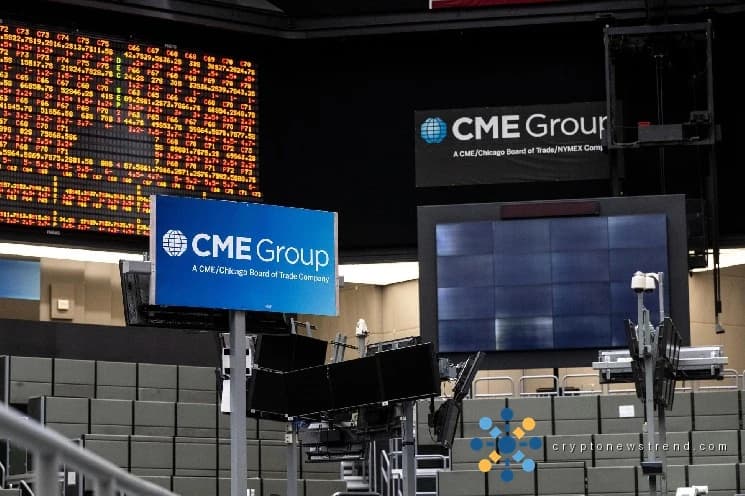
In a significant departure from traditional financial markets, the world of cryptocurrency has long operated on a unique temporal framework, untethered from the constraints of weekends, holidays, or clearing desk hours. This disparity has historically distinguished crypto-native platforms from their regulated counterparts. However, this chasm is rapidly narrowing, as exemplified by CME Group's recent announcement to facilitate 24-hour, seven-day trading of regulated cryptocurrency futures and options, commencing May 29, pending regulatory approval. This move signifies more than a mere expansion of operational hours; it represents a seismic shift in traditional finance's approach to market structure, one that is increasingly being pulled towards the continuous trading paradigm pioneered by crypto.
The question of whether institutional investors can engage in around-the-clock crypto trading is no longer a pertinent one, given the existing avenues for such activity via offshore venues, prime brokers, market makers, and liquidity providers. The more pressing concern lies in the ability of regulated finance to adapt its clearing, custody, surveillance, privacy, and risk management systems to operate seamlessly in an environment where leverage, information, and volatility are in perpetual motion. The advent of crypto's 24/7 derivatives era is not merely rendering digital assets more institutional; it is compelling traditional finance to evolve into a more continuous and fluid entity.
Derivatives have emerged as the linchpin of crypto's institutional layer, with the epicenter of market activity shifting away from simple spot trading. According to CCData's January 2026 Exchange Review, centralized exchange volumes totaled $5.26 trillion, with spot trading accounting for $1.27 trillion, thereby underscoring the dominance of derivatives in driving market activity. This transformation is not merely a matter of price discovery; derivatives are increasingly shaping market dynamics, influencing liquidity, funding rates, volatility expectations, and institutional positioning. As derivatives become the primary venue for market expression, the concept of trading hours transcends mere convenience, assuming a structural significance that cannot be ignored.
CME's decision to extend trading hours is a response to institutional demand for more continuous risk management, as evidenced by the record $3 trillion in notional cryptocurrency futures and options volume in 2025. This development is not a fringe phenomenon but rather a testament to the mainstreaming of crypto derivatives within regulated marketplaces. However, the extension of trading hours also highlights the lingering disconnect between continuous execution and legacy settlement systems. While CME's model expands trading access, it still adheres to traditional institutional mechanics, with weekend and holiday trades being assigned the next business day's trade date, and clearing, settlement, and regulatory reporting proceeding within the existing framework.
The integration of crypto-speed execution with regulated market infrastructure poses a unique challenge, as it requires the reconciliation of continuous trading with the need for reporting obligations, margin discipline, risk controls, and clearing protocols. In this environment, operational readiness becomes an integral component of market structure, and the next competitive edge may lie in the ability to monitor risk, margin exposure, custody flows, and compliance exceptions in real-time without compromising institutional controls. The always-on design of crypto markets also introduces the challenge of transparency, which, while useful for settlement finality, can expose market participants to risks such as front-running and information leakage.
According to Natalie Newson, Senior Blockchain Investigator at CertiK, public blockchain transparency can simultaneously reduce systemic risk and create new attack surfaces. This duality is at the heart of the institutional adoption question, as public auditability is beneficial for trust in settlement but can also compromise confidential business information. The issue of transparency is not merely a matter of cybersecurity; it is a question of whether an always-on financial system can protect commercially sensitive behavior while preserving the auditability that underlies blockchain infrastructure.
The early crypto argument in favor of transparency is being reevaluated, as institutions seek to balance the need for trust with the requirement for privacy. Varun Kabra, Chief Growth Officer of Concordium, notes that transparency becomes a structural constraint when businesses attempt to utilize blockchain for real-world operations. The next phase of adoption will depend on the development of systems that combine privacy with accountability, allowing institutions to prove identity, authorization, eligibility, and compliance without exposing unnecessary information. This logic is already being applied beyond financial markets, with initiatives such as Concordium's partnership with the Danish Ice Hockey Union demonstrating the potential for zero-knowledge proofs and verified access protocols to safeguard user data.
The implications of CME's move extend beyond the realm of crypto, as traditional finance begins to adopt elements of crypto-native market structure in response to client demand, volatility, and liquidity. This evolution does not portend the decentralization of regulated finance; rather, it signifies a shift in cadence, with risk systems adapting to function in a market where exposure changes continuously. The transition to a hybrid market structure, where crypto assets trade on a crypto clock through increasingly regulated venues, will necessitate the rebuilding of traditional finance's control layer around a more continuous environment. For investors, crypto derivatives are emerging